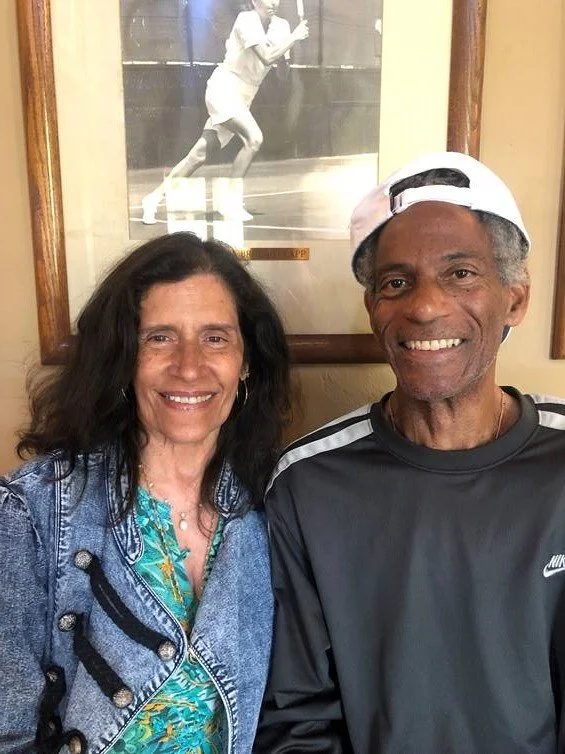
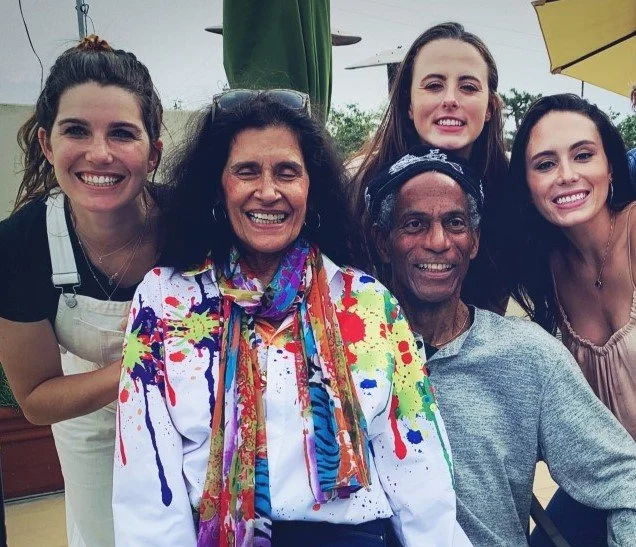
There was a photograph of Joe Louis on the living room wall. Bruce Foxworth grew up looking at it.
His father had been a Golden Gloves boxer, and the house ran on athletic discipline. Foxworth picked up a racket at seven and started running and jumping rope every day. That was his conditioning program.
He also went looking for something on his own. He grew up in church but started reading the Torah in high school, sneaking glances at the Old Testament during services. At Hampton University he found a student group studying Jewish texts and kept going. He read Torah every day for the rest of his life. He was a man drawn to wisdom wherever he found it.
He left St. Louis with a state high school singles championship from Principia, then won an NCAA Division II doubles title at Hampton. In 1977 he was the National Amateur Clay Court Champion and a member of the U.S. Davis Cup team for players 21 and under, climbing to a world ranking of 92 on the ATP Tour with main-draw appearances at the French Open, Wimbledon, and the U.S. Open.
His game looked effortless. He moved opponents around the court with surgical precision, pinned them to the corners, and finished them with shots that looked easy and were unreachable. While other pros traveled with trainers and nutritionists and fitness consultants and physical therapists, Foxworth ran and jumped rope. He always had.
When he retired from the tour he settled in Los Angeles and went to work coaching, working with Lori McNeil and other professionals at all four Grand Slams.
Then in 1992 he flipped his truck on a wet canyon road and broke his neck. Doctors gave him less than a half percent chance of walking again. No one heard him complain. He came back.
The members of the Los Angeles Tennis Club who had taken lessons from him pushed the club to hire him as director of its junior program. It wasn't his first time inside the gates. Years earlier, Foxworth had walked through the LATC with his wife, Geri, whom he had met at The Tennis Place. She remembered the way people looked at him. "I won't try to describe how people looked at him," she told The New Yorker in 2021.. "I just can't even describe it. I had to hold my tongue. But it didn't ruffle Bruce's feathers at all. He knew exactly who he was and was completely comfortable with it."
Founded in 1920, the LATC had long limited membership to whites and non-Jews and enforced exacting dress codes. On his first day, they asked him to cut his dreadlocks. He quietly tucked them in his cap and started teaching. In time, the cap came off.
He guided players through explanation. His students called it deep. He could describe what he wanted so precisely that demonstration became beside the point.
In 2011 the USTA honored him with the Curt Condon Spirit Award. In his acceptance, Foxworth said: "When we accept and embrace these challenges with the right attitude, it is the transformation from the negative to the positive which brings the fulfillment that keeps us coming back out to play."
Bruce Foxworth died in 2021.
(2019)
BRUCE FOXWORTH