TERRY WARD
Ask Terry Ward what he's proudest of after forty years in tennis, and he won't point to a trophy. He'll tell you about saving a plaque.
By the time he got involved, the St. Louis Tennis Hall of Fame had gone quiet. Founder Tom O'Neal had moved out of town, archivist Jack Eggmann had died, and names that should have been on a wall were buried in a closet. Terry was managing Frontenac Racquet Club then, about to buy in as part-owner, and he and the club's teaching pro, Maria Steinbach, decided that wasn't good enough. They rebuilt the whole thing, tying it to a pro doubles event that Mateo Dalla Fontana had started. And it worked.
Money used to be the easy part. In the early '90s, Tom O'Neal's connections to Butch Buchholz had made it possible to bring in Rod Laver, Billie Jean King, and Arthur Ashe at reasonable rates. By the time Terry took over, all that had changed. He brought Mats Wilander in twice and Brad Gilbert once, for around $15,000 each. Then he set his sights on Jimmy Connors.
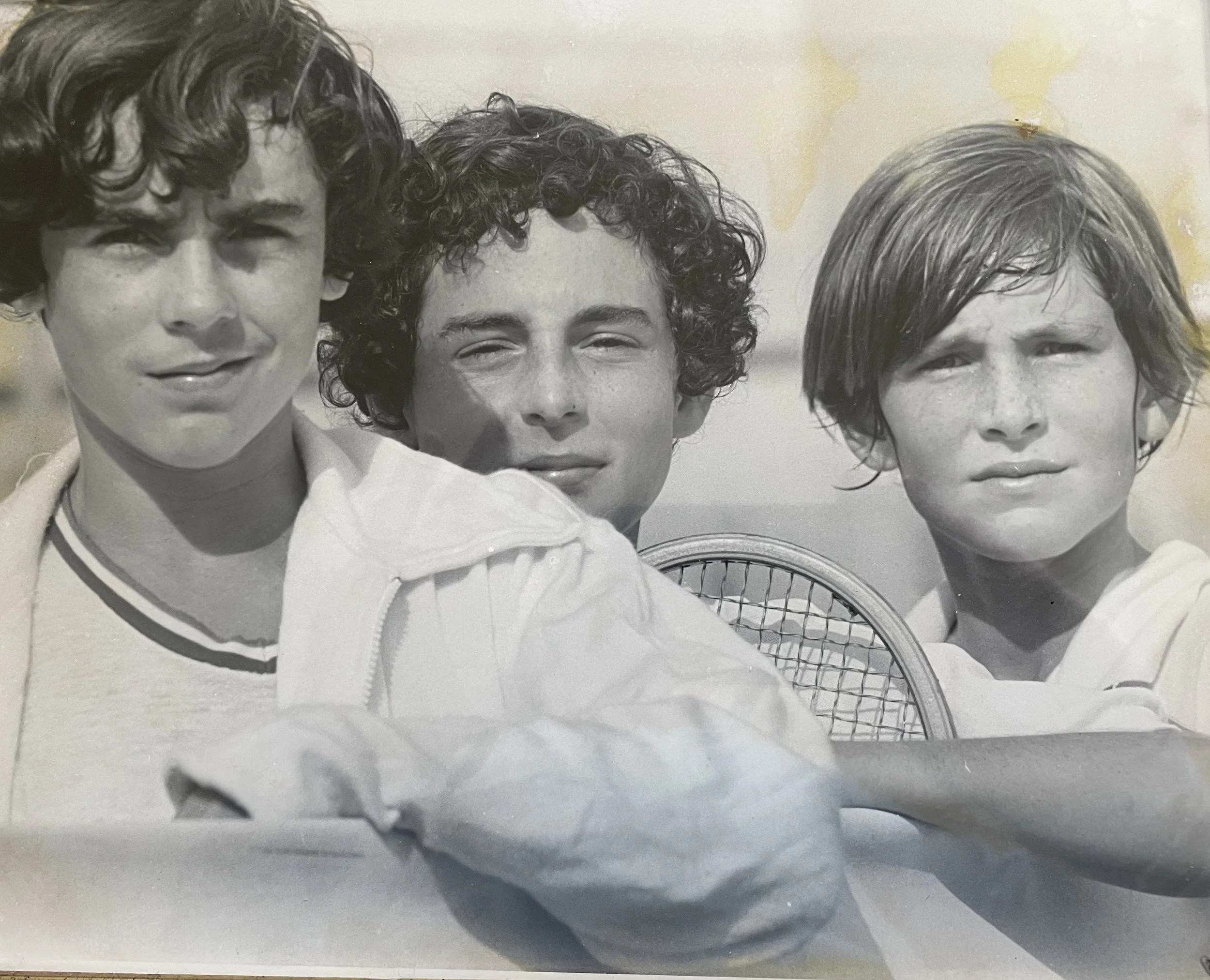
Getting him took some doing, but Terry made it happen. When Connors finally came to town, people treated it like a papal visit, elderly fans arriving in Ubers and taxis just to get near him. Terry still calls it one of the highlights of his career. He was one of six kids his parents sent outside after school with one rule: be home when it's dark. There were courts in the neighborhood, and that's where he started playing, around age eight, mostly with his own family. Warson Woods didn't have a junior program, and John F. Kennedy High School didn't even have a team. He made the rounds playing junior tournaments, but that was it.
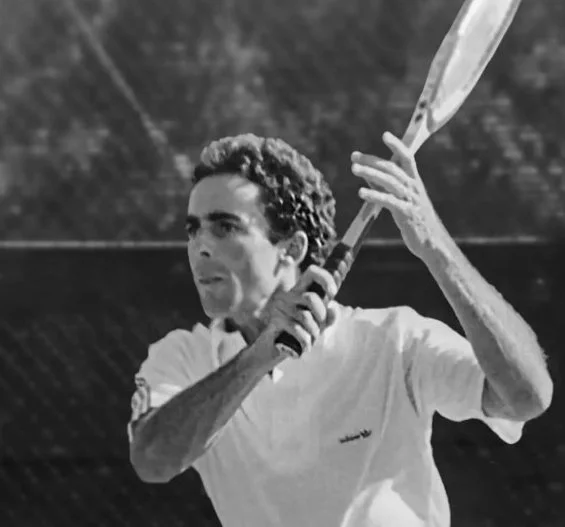
Junior college in Waco, Texas, is where tennis finally got serious. He made All-America there, and San Diego came calling. He kept playing through his twenties, mostly satellite tournaments in the summer, until marriage and kids put an end to that fast. He added Old Warson to his work at Frontenac in 1986, and calls that the start of his responsibility era. He played well enough that year to reach the final of the National Men's 35s Indoor, unseeded, while also running the club.
He built the Turboliner around the same time, a machine that strips old nails out of clay court lines, one of those inventions that solves a problem nobody outside the business would ever have.
Terry calls himself "a contributor to people's sanity." The way he sees it, people don't walk into a tennis club to escape their whole life, just the part of it that's weighing on them that day, and what they're really after is exercise and somebody to talk to. He gives them both. His legacy isn't only the hall of fame he rescued. It's also that he was, in his own words, instrumental in keeping tennis alive and healthy in St. Louis at the grassroots level.
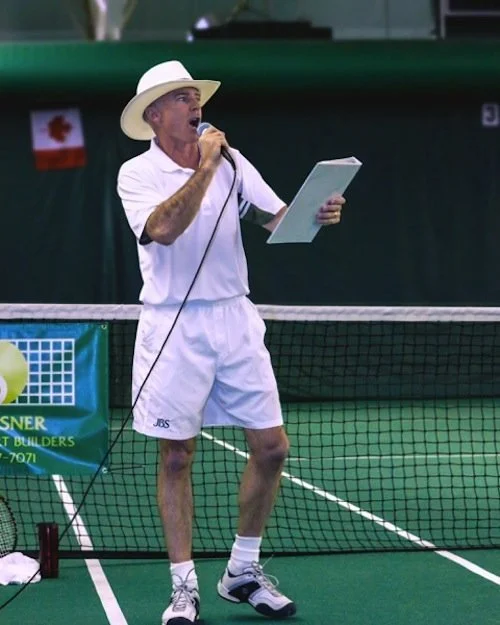
He's easy to spot wherever he is. The one with the wide-brimmed hat. He's never been a fan of sunscreen, so a straw hat was a good alternative. He branched out into wide-brimmed, and somewhere along the way it became his trademark.
(2016)