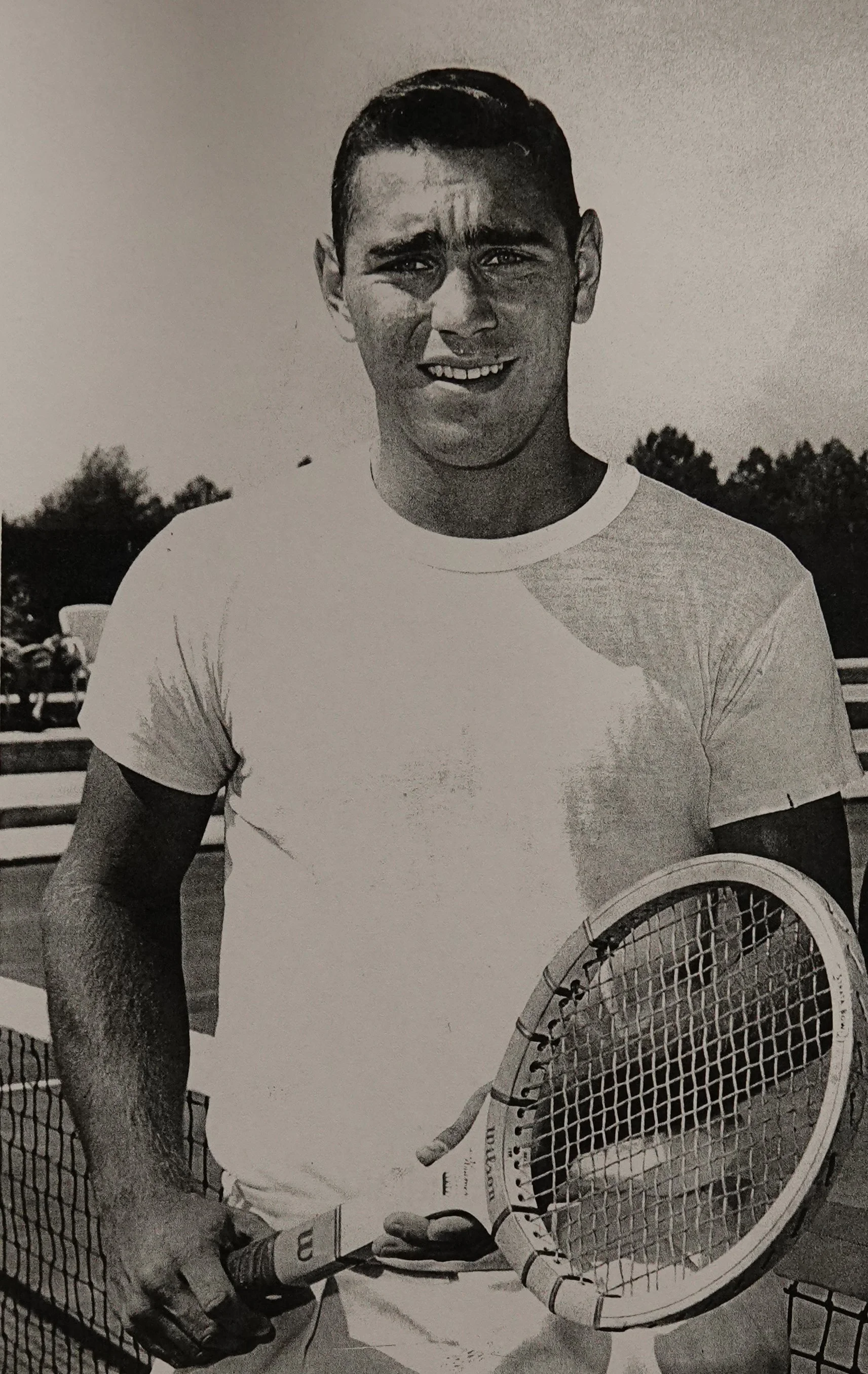
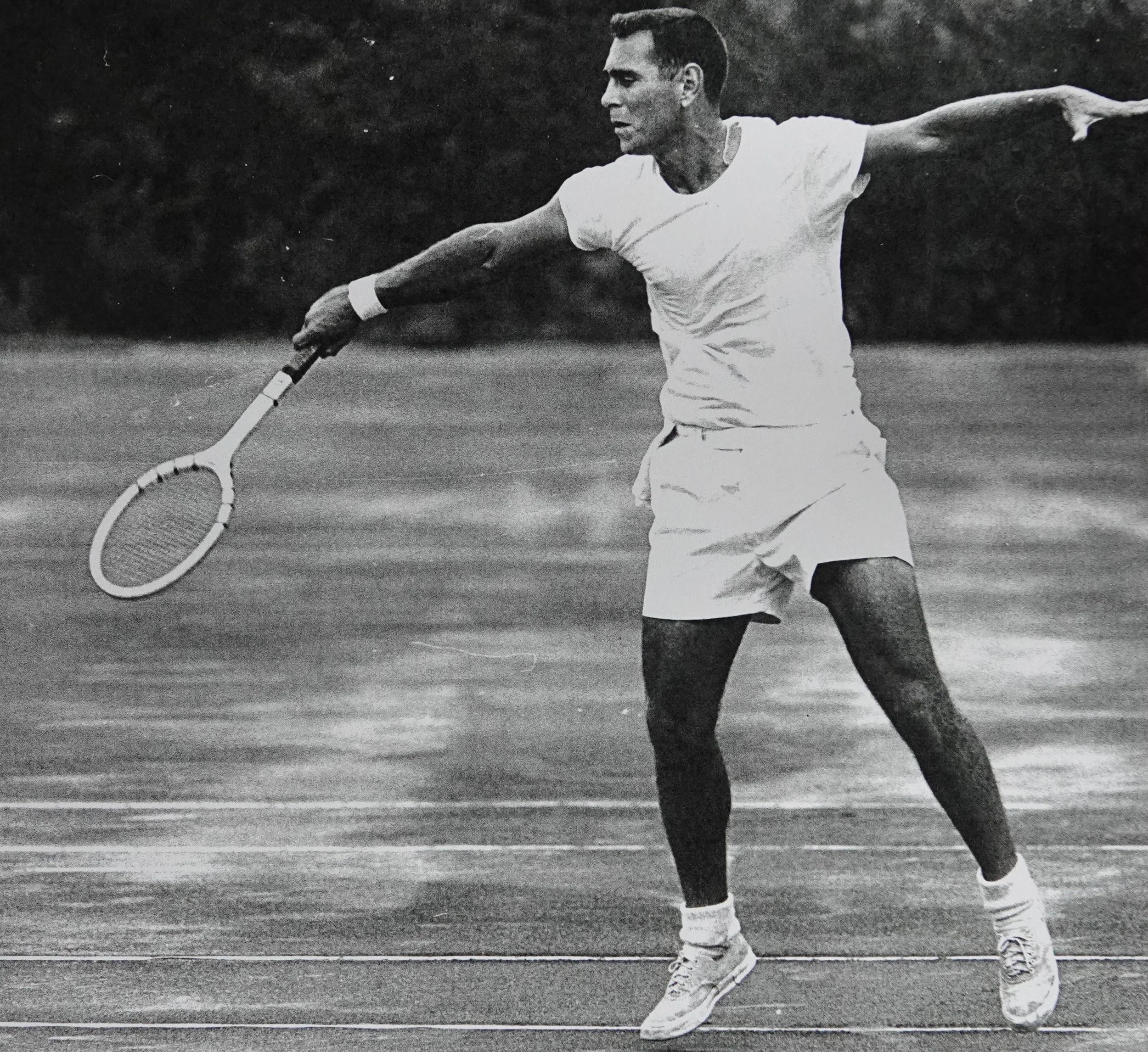
Bill Heinbecker started strong and never loosened his grip.
In 1958 he was ranked fourth in Missouri Valley junior singles and tenth nationally in junior doubles. He won the National Jaycees doubles. He came up in the golden age of St. Louis tennis, and helped define it.
At Notre Dame he played all four years, earned All-American status, and helped the Irish win their only NCAA championship in 1959. He and Maxwell Brown reached the NCAA men's doubles final that same year. Notre Dame Coach Tom Fallon didn't mince words: "Probably not only the best doubles player Notre Dame has ever turned out, but also one of the nicest human beings I have ever known."
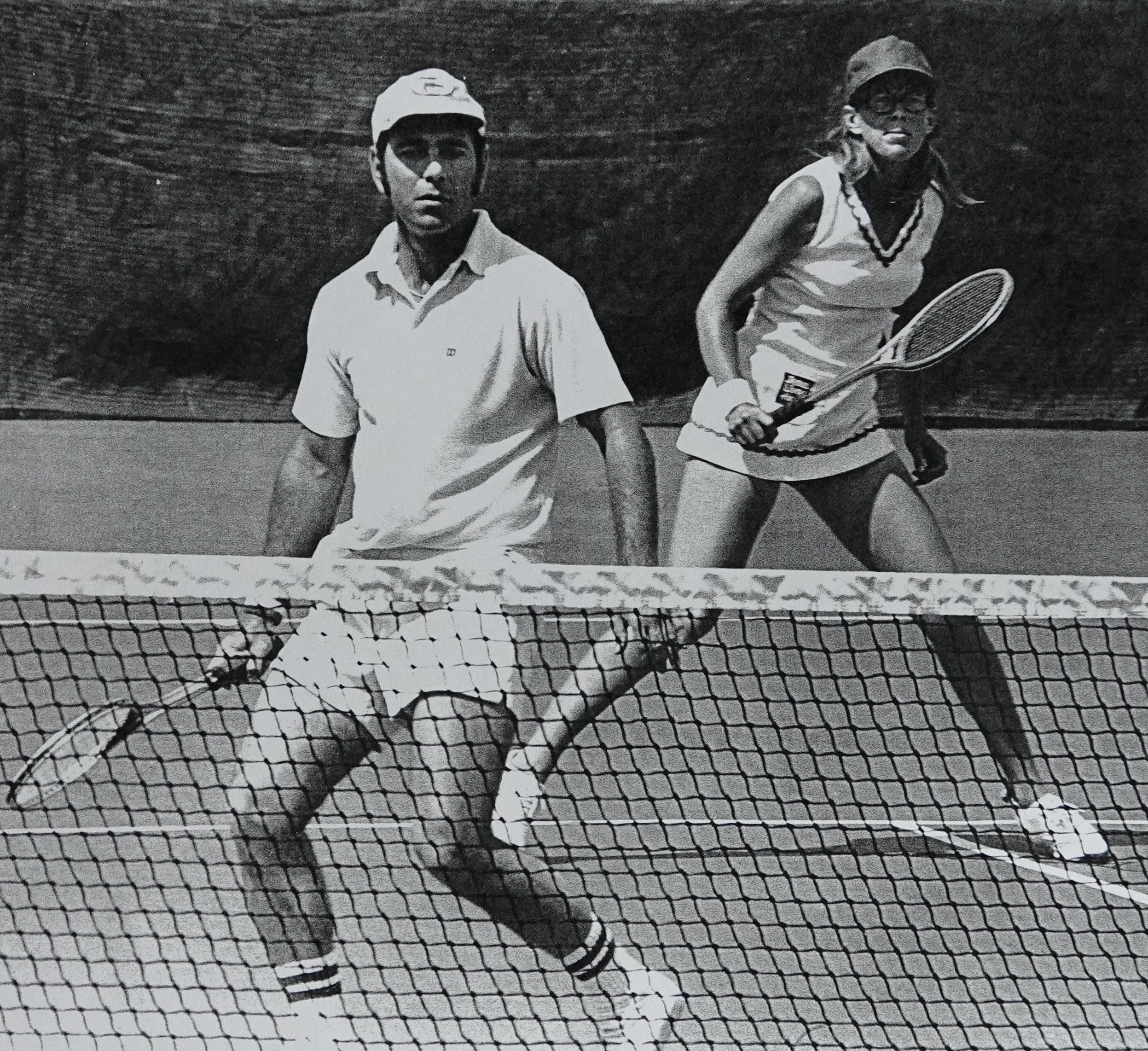
Back home, he became one of St. Louis's most decorated players across two decades. He won the District men's singles four times and the doubles seven times between 1958 and 1971. He won Missouri Valley Sectional men's doubles in 1959, 1964, and 1967. In 1965 he reached the finals in National Public Parks men's singles, doubles, and mixed doubles in the same tournament. With Carol Aucamp he won the Saks-Kodel and twice qualified for the US Open Mixed Doubles draw.
His longest partnership was with Jerry Johnson. In the 1960s and 70s you couldn't say one name without following it with the other. They were the perfect package. Heinbecker was the tactician. Precise, calculated. A chess master. Johnson brought the raw power. Big serve, punishing overhead. The kind that had their opponents standing ten feet behind the baseline before the point ever started. They dominated men's doubles in St. Louis and well beyond it. In 1971 they won the Men's Doubles Championship at the 55th ATA Nationals, held right here in St. Louis. It's only fitting that Heinbecker and Johnson were inducted into the Hall of Fame together.
His competitiveness was unmatched. His only weakness was tennis rackets. He'd bring six or seven strung just alike to the court and leave ten more at home. Rumor has it he had new rackets delivered to his neighbor's house so Nancy wouldn't know how many he had.
He may have competed hard, but off the court, he was an easy friend. He's proof that nice guys finish first.
(2003)
BILL HEINBECKER