TREY WALTKE
He was 12, maybe 13, and he had the phone numbers of the best players in St. Louis. Larry Miller. Dick Horwitz. Bill Heinbecker. He'd call them on Sunday nights and ask if they wanted to play that week. Nobody told him a kid wasn't supposed to do that. It just seemed normal.
His father started him at six, hitting balls in a parking lot at Kirkwood High School. From there it was the Armory, a fun cast of characters, Trey called it, a place to copy what the good players did and see what stuck. He never did learn the mechanics, and never wanted to. What he learned was how to watch someone and steal what worked.
All-American at Berkeley. National Hardcourt champion in the boys' 18s. In 1973: #5 in the country in singles, #1 in doubles.
Then nine years on the pro tour. Wins over McEnroe, Connors, Nastase, Stan Smith. Ranked as high as #41 in the world. Singles titles at Montgomery and Rancho Bernardo, two runner-up finishes, a mixed doubles title with Billie Jean King at World Team Tennis.
He did it at 5-8 and 145 pounds, against men built to overpower. There was no serving anyone off the court. He had to think his way through matches that bigger players just muscled through, and it wore on him, not the losses, the grind of it, night after night, strategizing his way to a career he still calls streaky. Good, but not good enough for his own liking.
Then there were the pants.
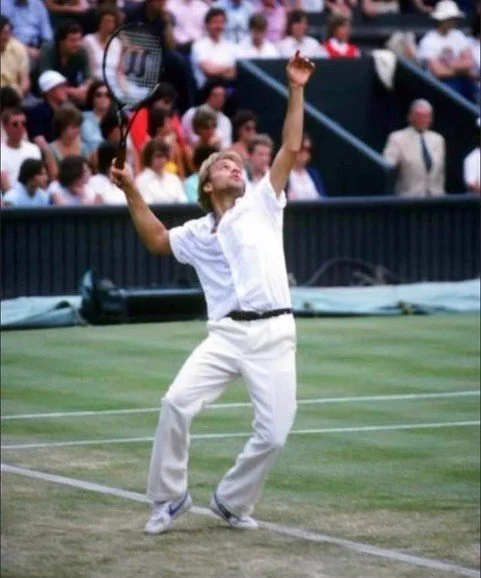
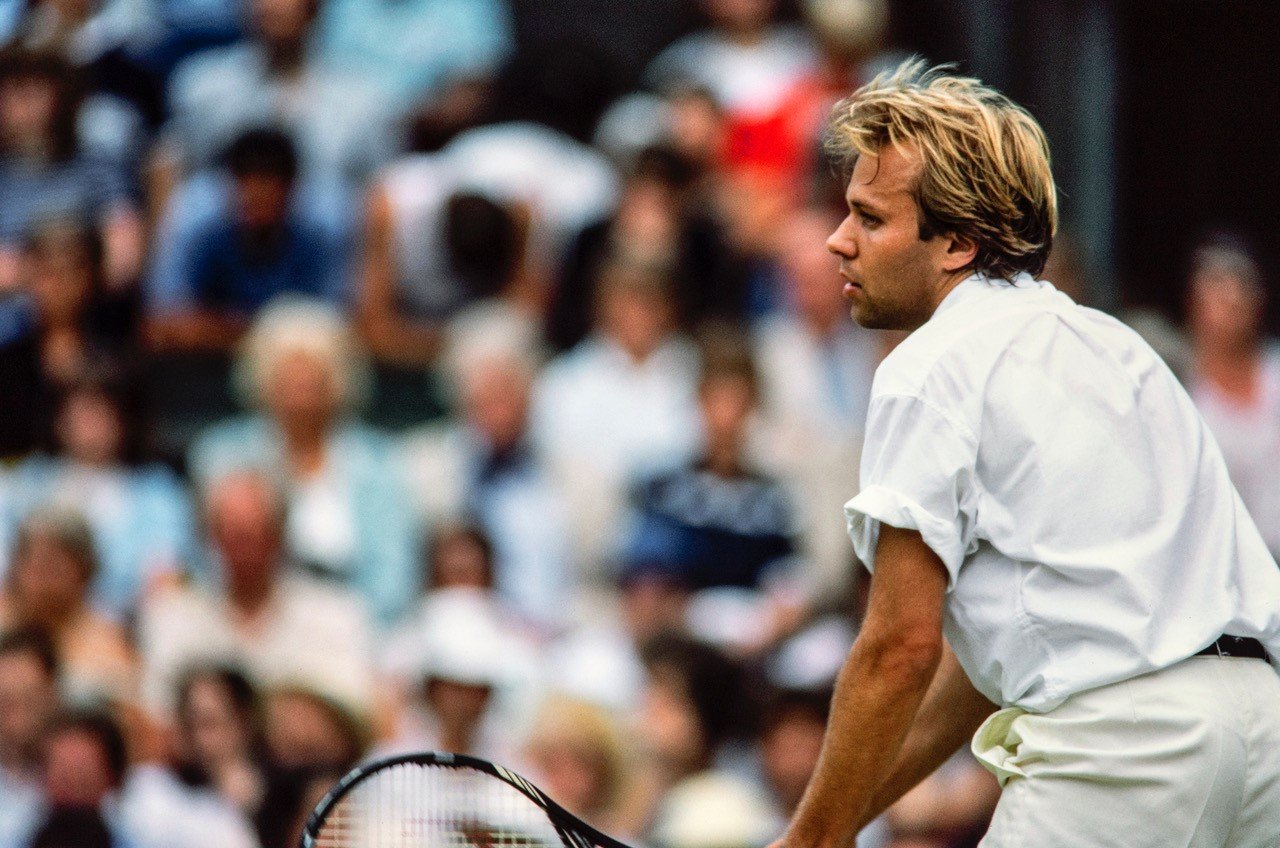
He was sure 1983 was going to be his last year at Wimbledon, so he decided to play it like a tennis historian: a cable-knit sweater, a button-down shirt, long white flannels like the old-timers wore. Only he couldn't find any pants that fit right, and for a while he figured that was the end of the idea.
Someone in London suggested cricket pants. He found a shop in Piccadilly, put a pair on, and walked out to the court. Stan Smith noticed the photographers trailing Trey instead of him and needled him for it, called it a publicity stunt. That was all the motivation Trey needed. He beat Smith in five, who retired down a break in the fifth.
Ted Tinling caught up with him the next day. Your outfit is incomplete, the designer told him. You need a tie for your club. Trey didn't have a club. Tinling sewed loops onto the pants and threaded a Wimbledon tie through as a belt. The next day Trey walked onto Centre Court for the only time in his career, properly dressed by a man who'd dressed royalty.
The pants themselves are long gone. He threw them out, he says, once it was clear he'd never see a size 30 waist again.
He still thinks about the two surfaces that shaped him, the Armory teaching quick decisions, the clay at Triple A teaching patience, and he thinks that's no small part of why St. Louis produced so many good players. It made you well-rounded whether you wanted to be or not.
Arthur Ashe inducted him into the Hall of Fame in 1992.
(1991)