THE ARMORY
Nobody builds a tennis dynasty in a drill hall. We did.
Even at Zero
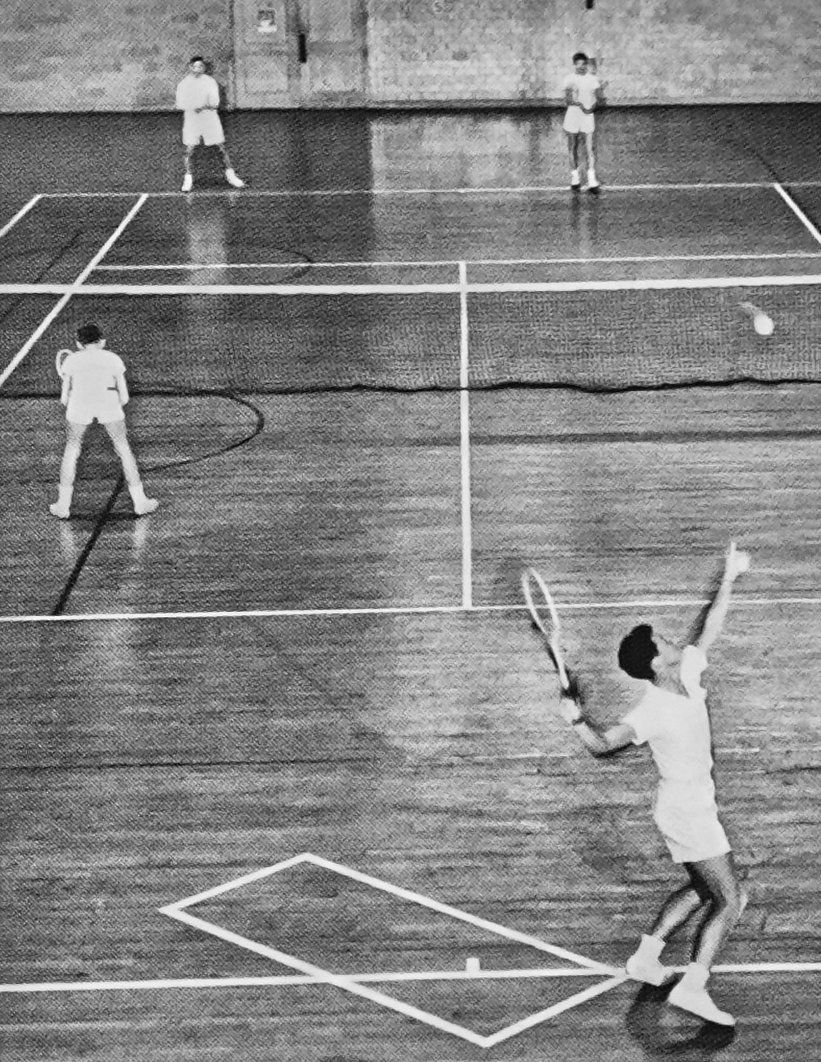
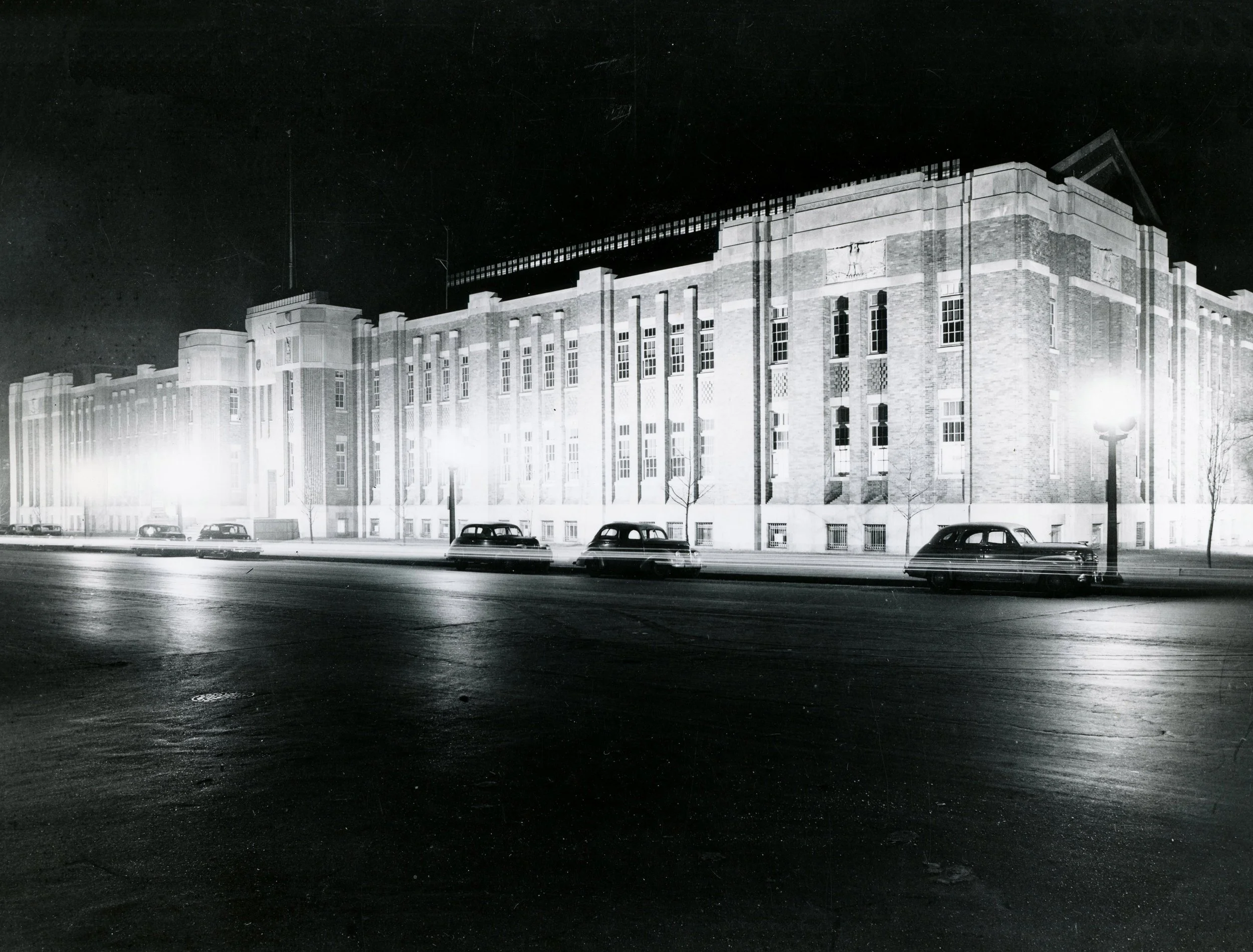
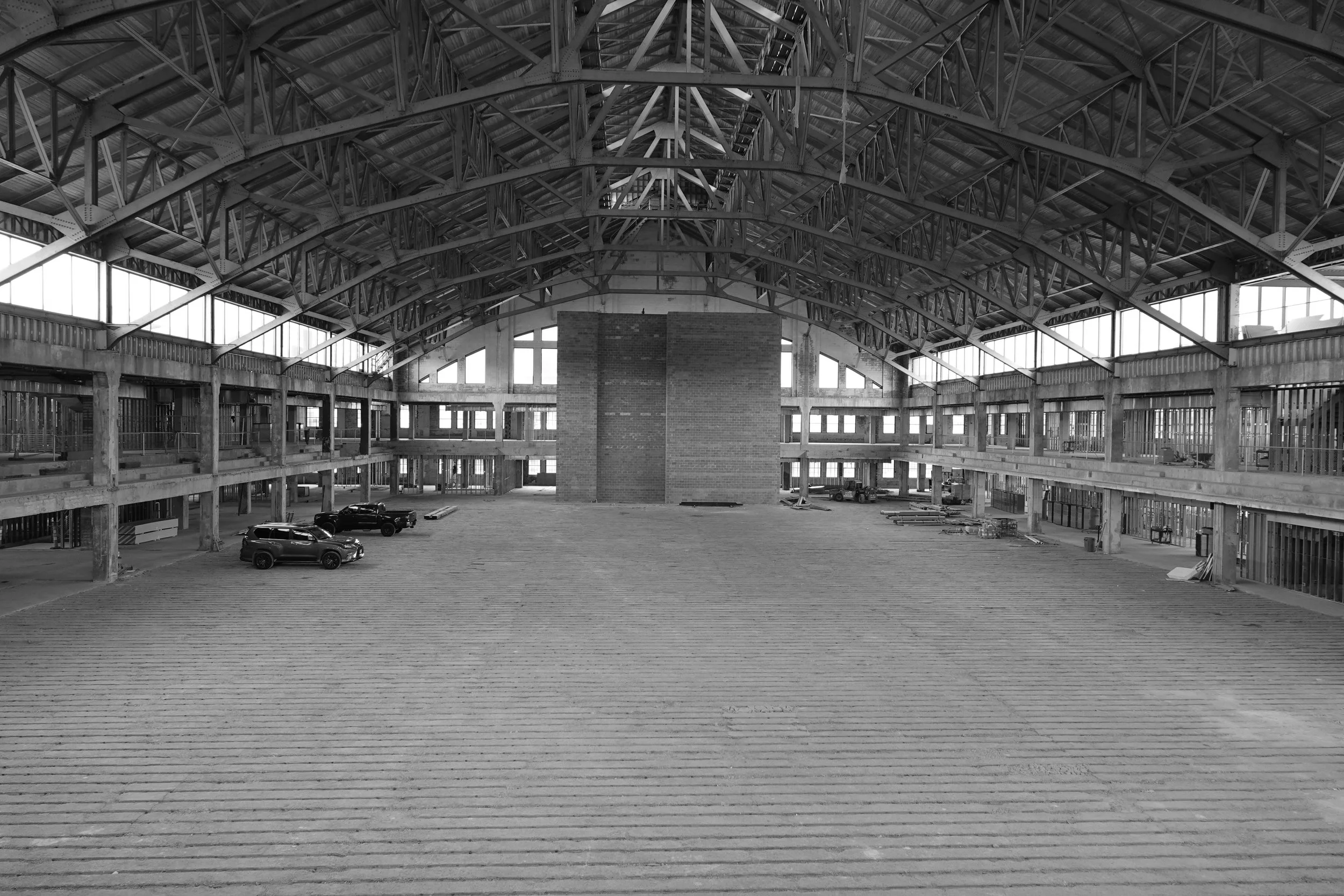
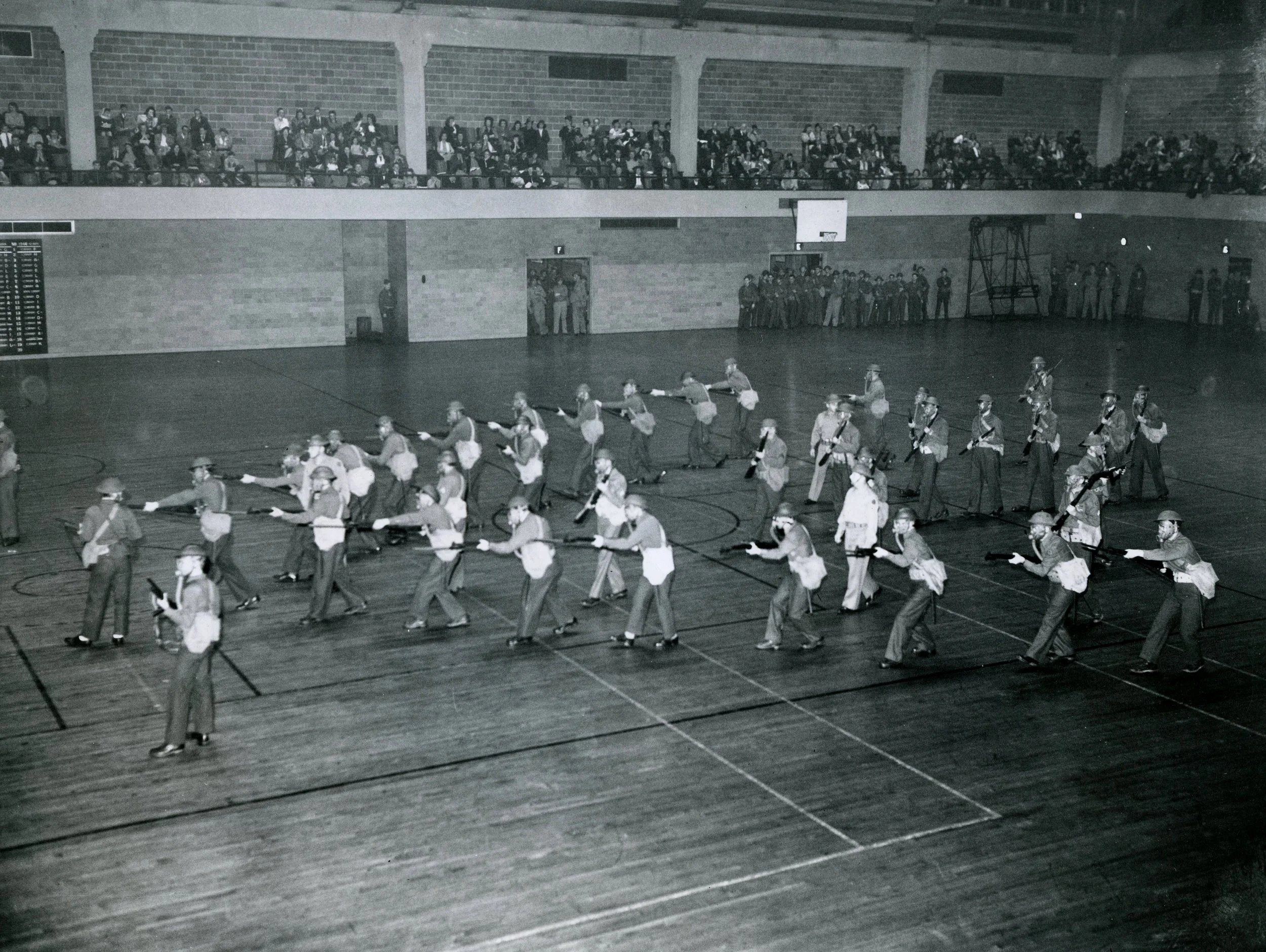
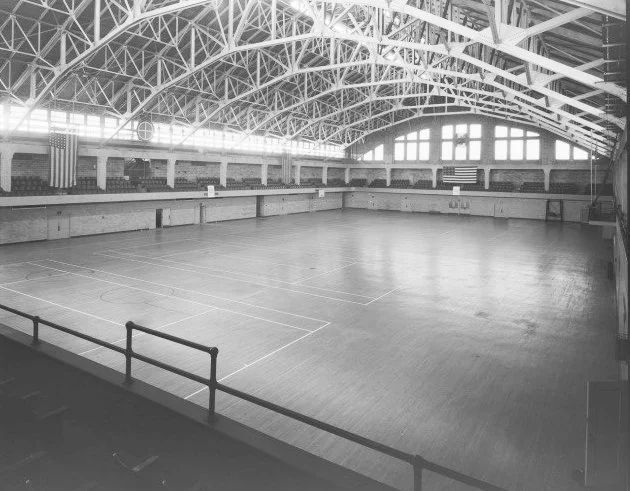
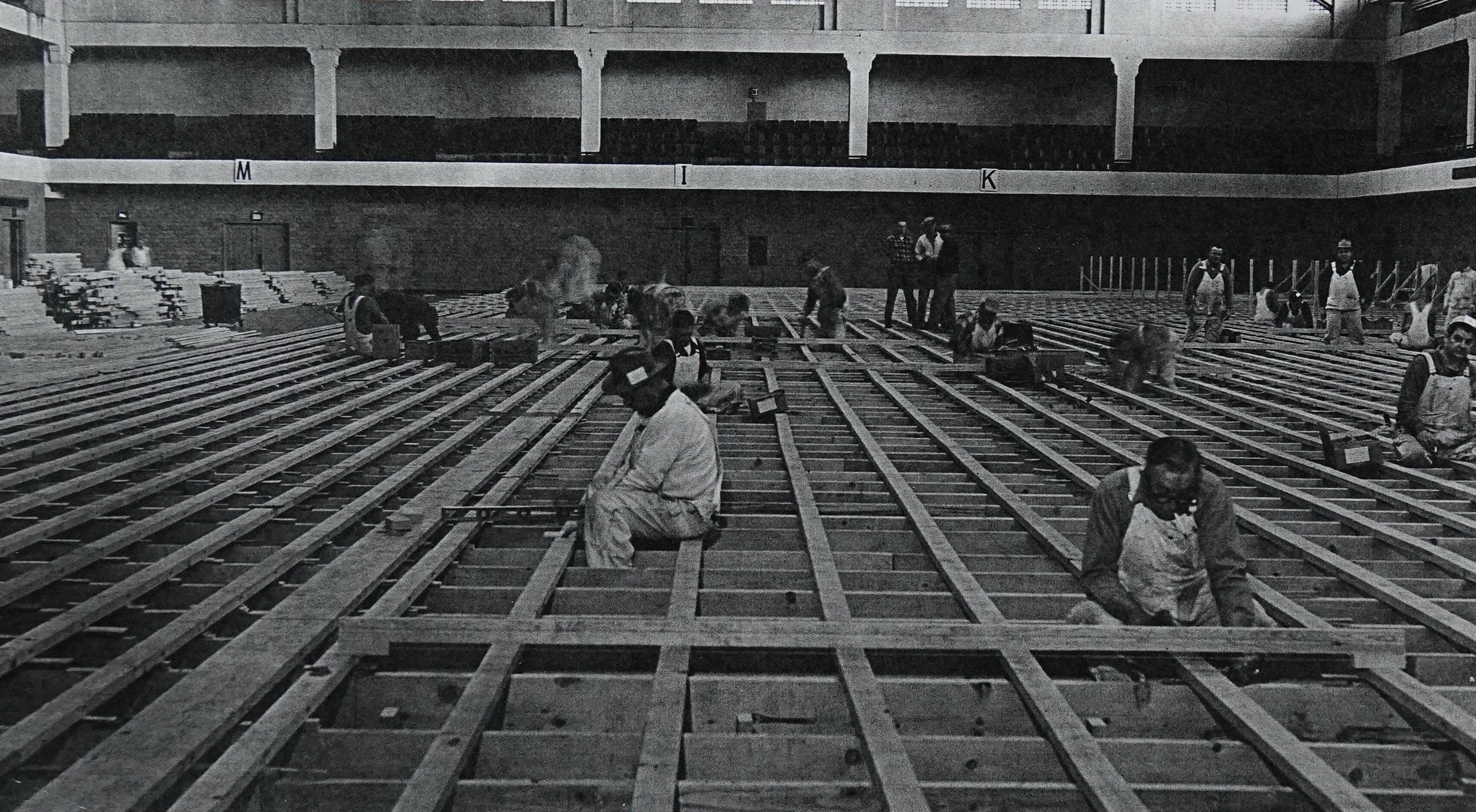
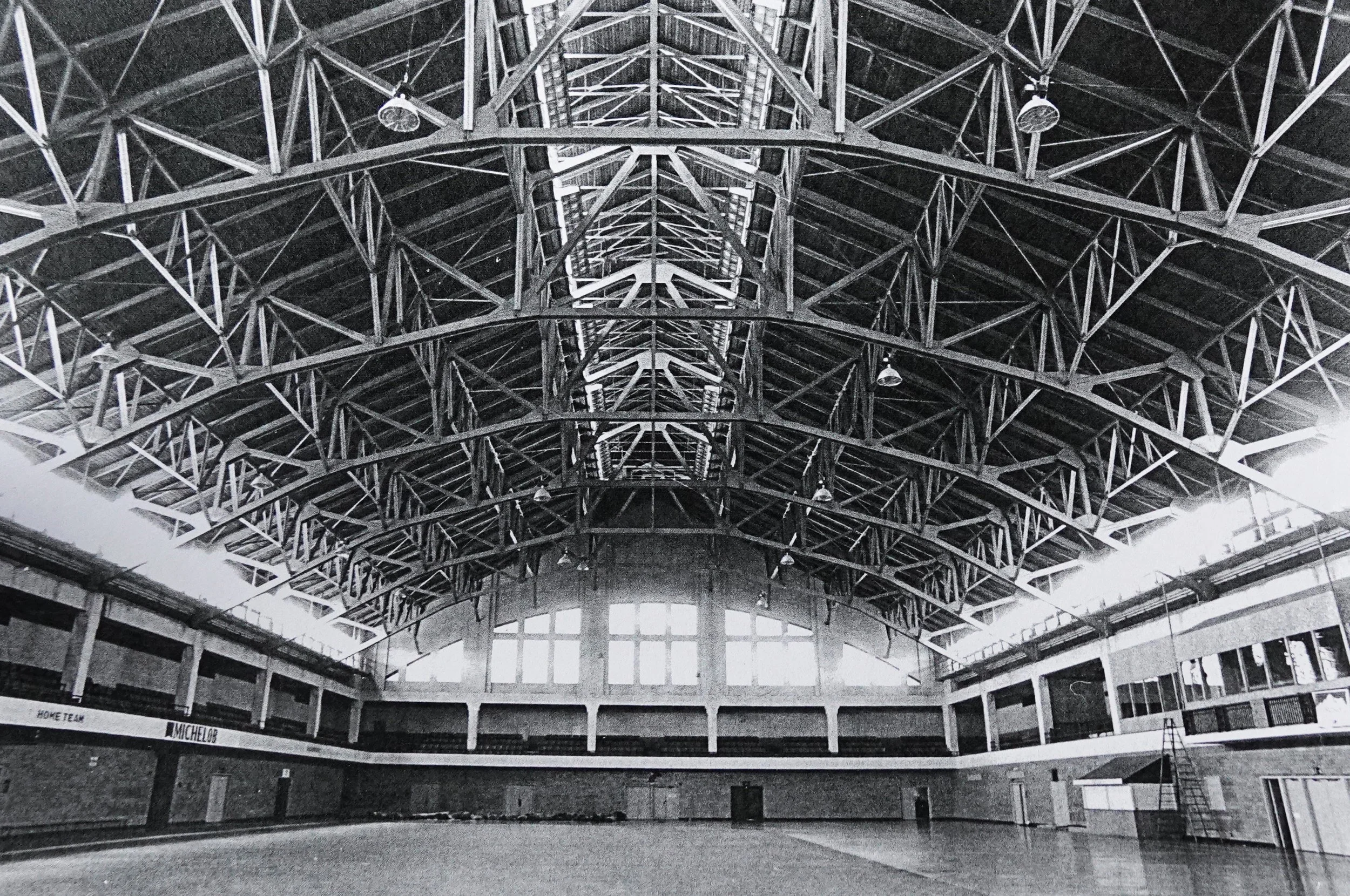
The 138th Infantry Armory on Market Street was dank, dark, and cavernous. It smelled like motor oil and muscle rub and fifty years of damp air that had nowhere to go. It got so cold in winter that players wore their coats to play. Balls went rock hard and lost their bounce. Strings snapped in the freezing air. The floors squeaked like a basketball gym, and every shot echoed off the walls. The ball came off that polished wood so fast you barely had time to get your racket back. If it caught you, it stung.
The balls went grey fast, and against the sand-colored courts under dim lights, you lost them half the time. Only at Thanksgiving, when green curtains went up for the National Junior Indoors, could you actually see the thing. To get a court, you sat against the back wall and waited your turn.
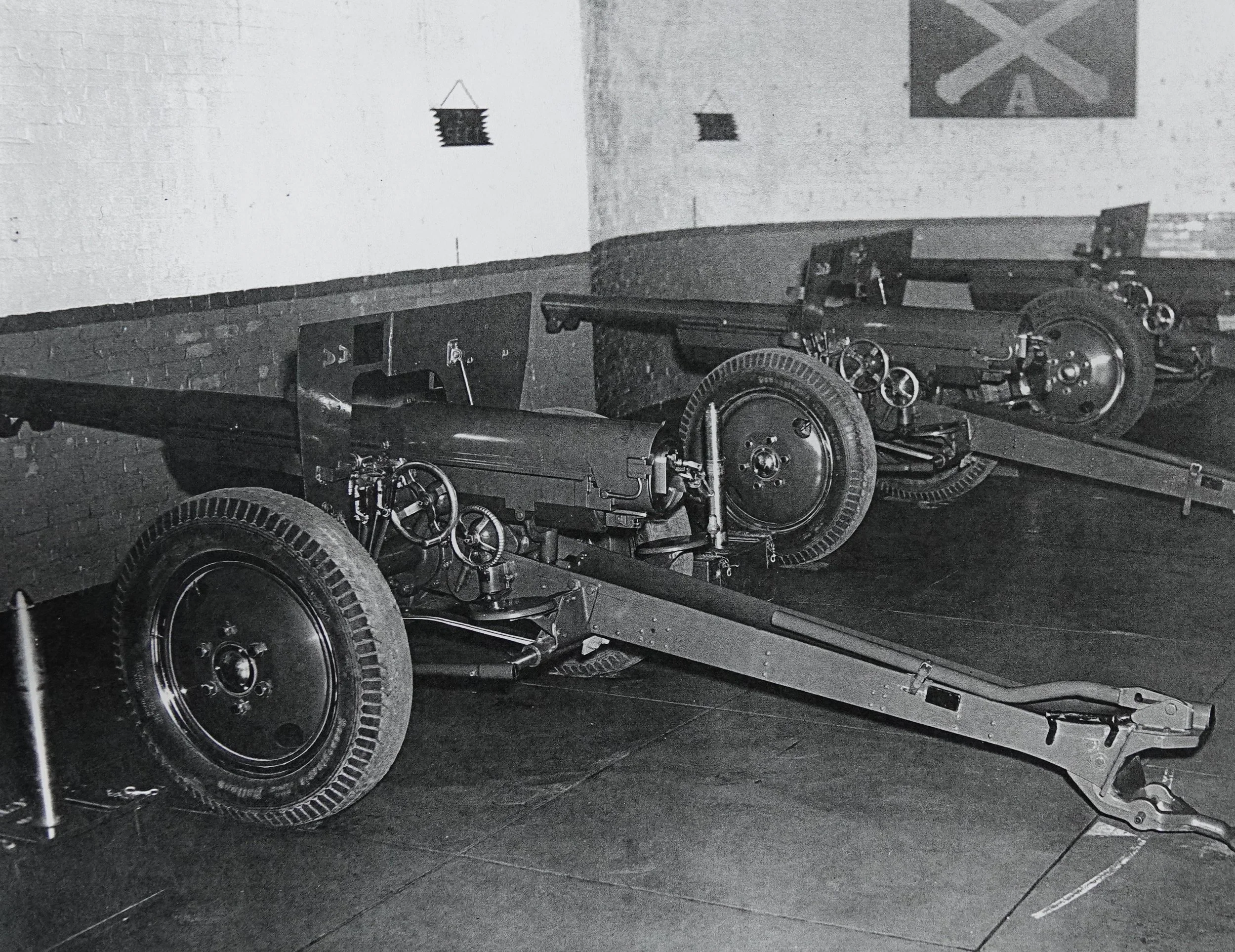
This was the Armory. Not a country club. You changed in the pro shop with everyone else. Downstairs there was a locker room, but it sat behind the tanks and trucks the National Guard kept there, and you couldn't always squeeze past them.
None of that was the hard part. Playing on those floors was humbling. Until it wasn't.
It started with Karl Hodge. Hodge was in New York for the National Indoor Championships when he overheard organizers talking about moving the U.S. National Junior Indoor Championships somewhere else. He came home and helped persuade the District Tennis Association to bring the tournament to St. Louis. It arrived in 1948 and left in 1961.
Rex Caruthers came home from WWII as an Army major attached to the 138th Infantry. He spent his days at Washington University law school and his nights running the Armory. He got the colonel in charge interested in tennis. An elite junior player himself, he knew exactly what the building could become. He also had a knack for picking winners. He later became Jimmy Connors' personal attorney.
Allan Carvell was St. Louis's first full-time tennis pro, running Triple A in the summer and director of the 138th Infantry Regiment Tennis Association in the winter. In 1947, Post-Dispatch sports columnist John Wray lamented that St. Louis hadn't produced a player of national or international standing since the late Dwight Davis. Carvell wrote back. The answer was indoor tennis. The Armory had five courts. Give it four years.
He was wrong. It took less.
Carvell even had a slogan for it. Even at Zero We Still Have Tennis.
5 Courts. 500 Titles.
The question isn't how could so many champions go from the belly of the Armory to the world's biggest stage. It's, how could they not?
The Armory stripped everything away. Those floors didn’t care how pretty your strokes were. You had to have quick hands and learn to come to the net, because you'd much rather hit the ball out of the air than let it skid away from you. The building turned defensive players into offensive ones. And offensive players control the point. And if you could control the point there, you could control a match anywhere.
Forest Hills, Wimbledon and the Australian were all played on grass back then. To compete you had to take your racket back fast and come to net before the other guy. That's the exact game the Armory built. Four Armory men walked away with Wimbledon titles. Three Armory women won or reached the final of a major.
Larry Miller was the heartbeat of the Armory. As director and pro, he ran the courts, trained the players, and decided who played when. Nobody was above the court sheet. Not even Arthur Ashe.
Five courts. One building. Players of every age, race, gender, and skill level clamored to get on a court, playing side by side with whoever showed up. Before the Armory, there was nowhere to play. To them, this was luxury. And every stroke, a gift.
Nobody was there to squeak by. They were there to be champions. And greatness was just around the corner. The person on the next court might be Arthur Ashe. Or Butch Buchholz. Or Carol Hanks. You had to bring it every single time. When you weren't playing you were watching. When you were watching you were learning. Because if everyone got better, you got better.
The coaches never stopped coaching, on the court and off. If you were lucky, Mr. Hudlin might tap you on the shoulder and whisper one tip you would remember forever.
It wasn't a program. It was a community, built out of necessity, not design. All they had was each other. As it turned out, five courts was all it took.
The Gold Rush
It started with Ben Bishop. Ben Bishop had trained under Carvell for just a few years when he became the first Armory player to make a national mark, with a finals appearance at the National Indoor Juniors, ranking of 11, and a spot on the Junior Davis Cup team. Proof of concept.
Carvell had said give it four years. Bishop arrived ahead of schedule.
Butch Buchholz had already put St. Louis on the map. In 1959 he became the first player in history to capture the Boys' Singles Grand Slam junior titles at the Australian Open, French Open, Wimbledon, and the U.S. Open. His younger brother Cliff was right behind him. In the 1961 National Junior Indoor final, Cliff faced a familiar opponent, fellow Armory product Arthur Ashe. Two St. Louis kids trained on the same fast wooden floors, playing each other for a national title. Ashe won. St. Louis won.
Chuck McKinley never left anything on the court. He was 5'8", 155 pounds, and nobody's idea of a tennis player. They told him to be steady. He decided to be dangerous. It started at a ping pong table. Bill Price, a world-class table tennis star, believed the two games were connected. The tennis establishment disagreed. McKinley proved them wrong. Three years of table tennis, then it was time to hit the courts. By 1960 he was on the Davis Cup team and holding down the Number 1 U.S. men's doubles ranking. Writers called him Slambang. He had the build and punch of a middleweight boxer and the instincts of a street fighter. He came to net because the Armory taught him to. And at net he was nearly untouchable. He won Wimbledon in 1963. His Davis Cup record from 1960 to 1965 was 16-6. In the deciding match against Australia, with the Cup on the line, McKinley played John Newcombe and led the U.S. to a 3-2 victory.
Then came Ashe.
When Arthur Ashe arrived in the fall of 1960, he already knew how to play tennis. St. Louis taught him how to win. Training on those slick hardwood floors gave him a home court advantage at the National Junior Indoor Championships. He made history, becoming the first African American to take the title. The following year, thanks to the advocacy of his mentor Richard Hudlin, Ashe became one of the first Black players permitted to compete in the U.S. Interscholastic Championships. He won that too. As Ashe himself would later say: "St. Louis is one of the sine qua nons of my life. If I had not gone to St. Louis I would not be where I am today."
In 1964, when the only title most young girls thought possible was Mrs., three St. Louis women answered to something else. Champion. The press called them the Golden Girls of American tennis. Carol Hanks, Justina Bricka, and Mary Ann Eisel all finished in the top ten in the country. They got there together.
In 1962 Carol Hanks won the U.S. Hardcourt Singles title. The following year she won the U.S. Indoor Singles title and made history with Arthur Ashe as the first interracial team to compete at Wimbledon. In 1964 she reached the semifinals of the U.S. Open and earned a world ranking of nine. When Washington University had no women's tennis team, she played on the men's squad, compiled a 19-5 singles record, and helped them beat Notre Dame, Vanderbilt, and several Big Ten programs.
Justina Bricka ranked number five in the country in 1961 and stayed in the top ten for three consecutive years. She and Hanks won the National clay-court doubles title. She and Eisel won the Irish National Doubles title. She became the only player ever to defeat Billie Jean King in singles and doubles in the same tournament. And in the 33rd Wightman Cup, with the trophy on the line, Bricka made headlines. She stepped up to face world number one and reigning Wimbledon champion, Angela Mortimer, and beat her. The U.S. had their cup back. The St. Louis Globe-Democrat announced, "Justina Bricka Clinches Wightman Cup for U.S."
Mary Ann Eisel may best be remembered for a match she almost won. At the 1971 US Open, Eisel led a sixteen-year-old Chris Evert by a set, held six match points, and was serving for the match at 6-5, 40-0. Evert came back to win. The victory launched Chrissie Mania and made Chris Evert a star overnight. But it's the matches Eisel closed out that made her a champion. From 1964 to 1971 she ranked in the top ten among U.S. women eight times. Ten U.S. titles, one Grand Slam, a career-high ranking of number three. Twice.
Jimmy Connors grew up on the wrong side of the river. East St. Louis. The country clubs across the Mississippi wouldn't have him. So he played the Armory, Triple A in Forest Park, and the indoor courts at Washington University. He learned early that tennis was us against them. And he never forgot it.
A young Connors watched Chuck McKinley and built his game in his image. Not the same game, but the same attitude. Win at any cost. His mother Gloria had been a serious player herself, and she devoted 17 years to coaching him. She told him he was a tiger every single day. And he played like one.
On those fast floors, the ball came off so hard and so fast you had one choice: take it early or take the loss. Connors took it early his entire career. He became one of the greatest aggressive baseliners in tennis history, stepping inside the baseline to hit on the rise, taking time away from opponents before they could set up. His return of serve was considered his greatest weapon. He didn't beat you with power. He beat you with speed and timing and a refusal to give you a single extra second.
109 titles. A won-loss record of 1,331-274. Number one in the world. And at 39, a run to the US Open semifinals that had the whole country on its feet.
Ken Flach came to the Armory toward the end. The building was winding down. He was just getting started.
Flach and Robert Seguso won back-to-back Wimbledon doubles titles in 1987 and 1988, the US Open doubles in 1985, and Olympic Gold in Seoul. He won the 1986 French Open and Wimbledon mixed doubles with Kathy Jordan. With Rick Leach, he took the US Open doubles again in 1993. On the Davis Cup team, he won 11 of 13 matches between 1985 and 1991. He later led Vanderbilt's tennis program to the NCAA finals.
The Brain Trust
Larry Miller
Larry Miller took the head pro job in 1954, building on the foundation Allan Carvell had already laid. Every Saturday morning he left his house in Brentwood and drove around picking up kids for his junior clinic, because some of them had no other way to get there. That was Larry. When Arthur arrived, Cliff Buchholz and Jimmy Parker were beating him easily. His graceful clay-court strokes were no match for the punishing hardwood. So Miller shortened his swing, put topspin on his backhand, pushed him to net, and never charged him a dime. After seven lessons he told Ashe to enter every tournament he could find, ready or not, because the only way to get tournament tough was to play tournaments. Two months later Ashe won his first national title, the Junior Indoor, grinding out a five-set war against the top seed two years older than him, 6-4, 16-14, 9-11, 3-6, 6-1, until the kid finally folded. Ashe grew up on clay. Miller gave him a game for every surface, and Ashe would credit it, years later, for his Wimbledon, US Open, and Australian Open titles. Jimmy Connors showed up a few years later from across the river, feeling like an outsider before he'd hit a ball. Miller didn't care where he was from. He welcomed him anyway and became his hitting partner. Justina Bricka put it best: 'If it weren't for Larry, nobody who got to play nationally or internationally would have been there, period. Larry was the Armory, and that's where you had to go to play tennis.”
Richard Hudlin
They called him The Professor. Richard Hudlin was a school teacher during the week, a tennis coach in his free time. He was soft spoken. But there were times when his voice needed to be heard. In 1945, he sued the city to open up its public courts, and won. In 1948, when tournament officials tried to bar Oscar Johnson from the National Junior Indoor, held on their own home courts, Hudlin fought the USLTA until they backed down and let him play. Ashe was the second Black player let onto the Armory courts. Hudlin took him in, paid his way, coached him, and threw him into the deep end of Armory competition. Years later, Ashe became bigger than the Armory. But he still made time to come back and give clinics to the next generation: Renée Blount, Bruce Foxworth, Juan Farrow. Crowds gathered for him like he was a tennis god. All three of Hudlin's students would go on to become coaches themselves, carrying on his tradition of turning champions into teachers.
Earl Buchholz Sr.
Earl Buchholz Sr. never drove a car. He got around St. Louis on buses, streetcars, and rides from friends. What mattered to him was getting other people where they needed to go. Hudlin gave his time to a select few and made it count. Buchholz Sr. gave his away to anyone who wanted it. In addition to his own sons, Butch and Cliff, he coached Justina Bricka, Arthur Ashe, Renée Blount, and Althea Gibson, along with kids who just wanted to make their high school team. He and Hudlin were good friends, and together they made sure the Armory belonged to everyone. He was never loud, but when he spoke, you listened. Doubles, to him, wasn't about being the most important player on the court. It was about being your partner's favorite. Make them feel like the most important person out there, he'd say, and you'll never have to look for a partner again. He drilled players until they could feel the ball on the strings, because he knew how good that felt and wanted them to feel it, too. He didn't just give them the tools to keep playing. He gave them the desire.
Bill Price
Bill Price was a table tennis world champion before he ever coached tennis, and he brought that table with him. That's where he taught strokes, topspin, and slice. He never tried to build the next Chuck McKinley or Mary Ann Eisel. He just maximized whatever a player already had. Players learned three times faster there, Price said. After a year, they were ready for the court, and even then he rarely joined them. From the side, he'd watch, and when a player came off, he'd offer one thing, maybe two. Not a lecture. A pointer. Losing didn't sit well with him, and excuses sat even worse. One coach, one voice was the rule, so parents had to stay far enough back that theirs couldn't be heard. Al Holtman, Chuck McKinley, Mary Ann Eisel, Justina Bricka, Bobby McKinley. All of them came out of his program. A day job paid his bills. Nobody paid him to make champions. He did it anyway.
Al Rothschild
Al Rothschild turned pro when tennis was still officially an amateur's game, which meant it couldn't pay his bills. So he made his living some other way, and on weekends he showed up at the Armory, hitting with the best juniors there for nothing. He wasn't anyone's coach. He was everyone's practice partner. He was crusty, quick to temper, and impossible to please. Years later he coached one player for the first time, ever: his daughter Maria. And he went hard. Praise wasn't in him, earned or not. Maria went on to be a French Junior International finalist, Junior Wimbledon quarterfinalist, Junior Wightman Cup player, ranked fifth nationally, eighth internationally in the 18s in 1978, and earned a wild card into the US Open. In spite of him, or maybe because of him.
Lightning in a Bottle
New indoor clubs were opening up all over the city, and by the mid-1970s, the Armory's run was over. Players had other places to go. The days were over when you could walk in on any given day and see Butch hitting with Chuck, or Mary Ann, Carol, and Justina playing doubles with Wimbledon champion Karen Susman. Never again could a twelve-year-old Paul Tobin split a court with Arthur and Cliff.
Ask players today what it was like, and they'll tell you like it was yesterday. They can still feel the cold, smell the old air, feel the slickness of those courts under their feet — courts faster than any they've played on since. They'll tell you about swapping techniques while they waited for Larry to call their name. But nobody remembers what it felt like when it was over. Like most things, it just was.
In 1982, Larry Miller told the Post-Dispatch: "Since people stopped playing at the Armory, St. Louis hasn't produced many top players."
"There was no racism," she said. "It was a sacred place for us. I was able to flourish in that atmosphere." - Reneé Blount (UCLA Library)
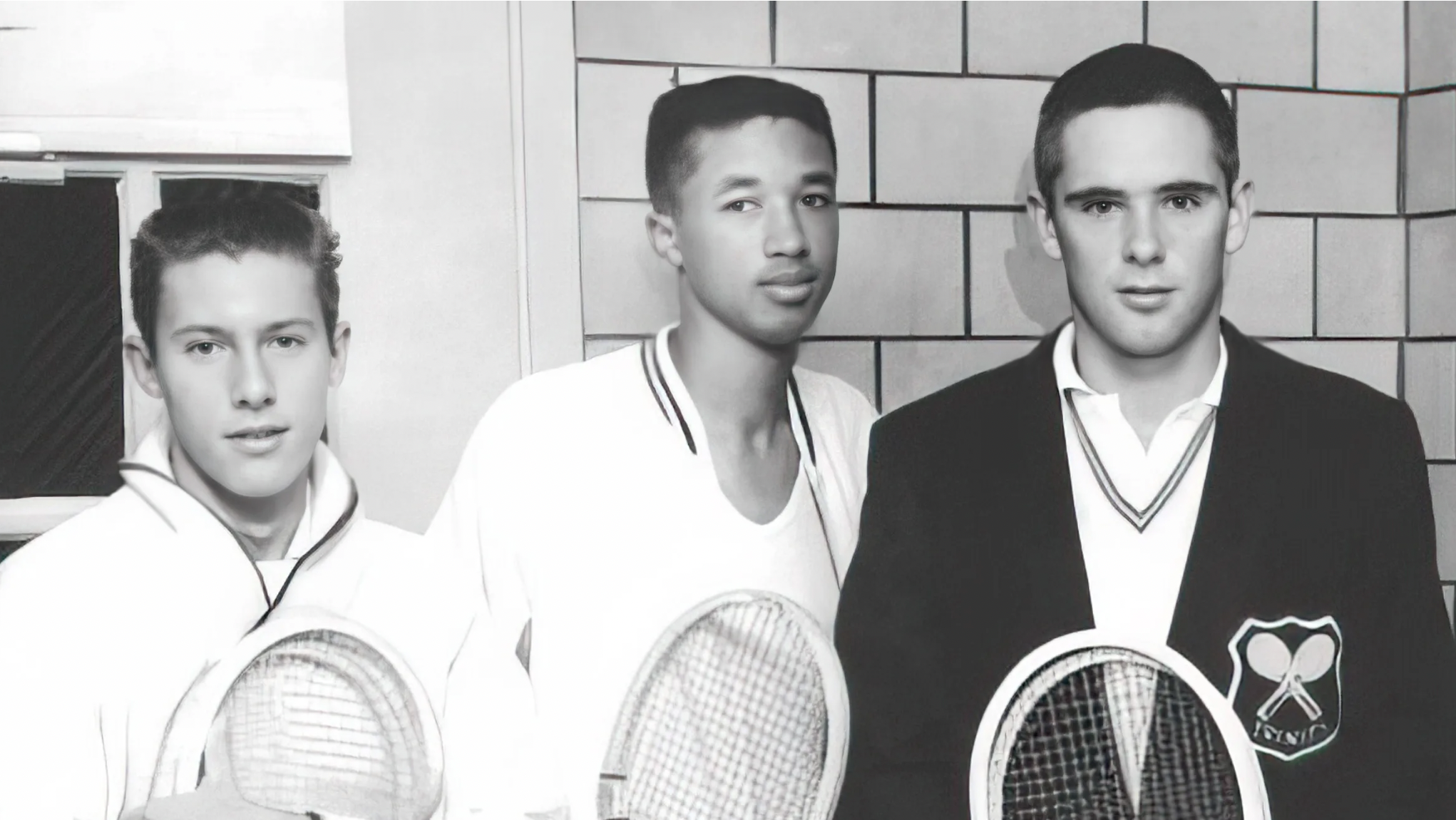
Jimmy Parker, Arthur Ashe & Cliff Buchholz at the Armory