THE PROMOTER
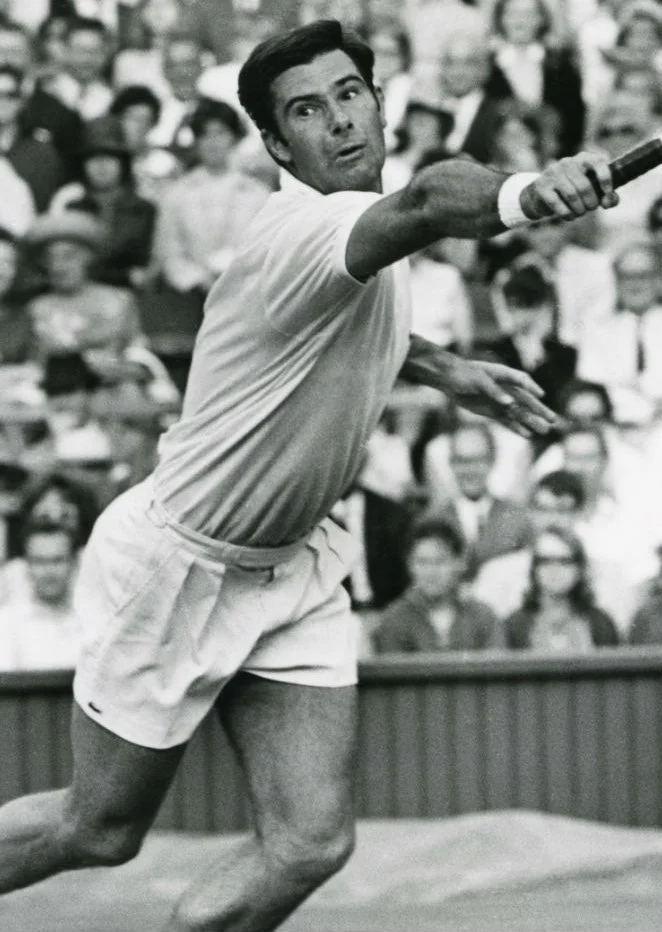
The question isn't what Butch Buchholz did for tennis. It's what he didn't do.
He Was Born For This
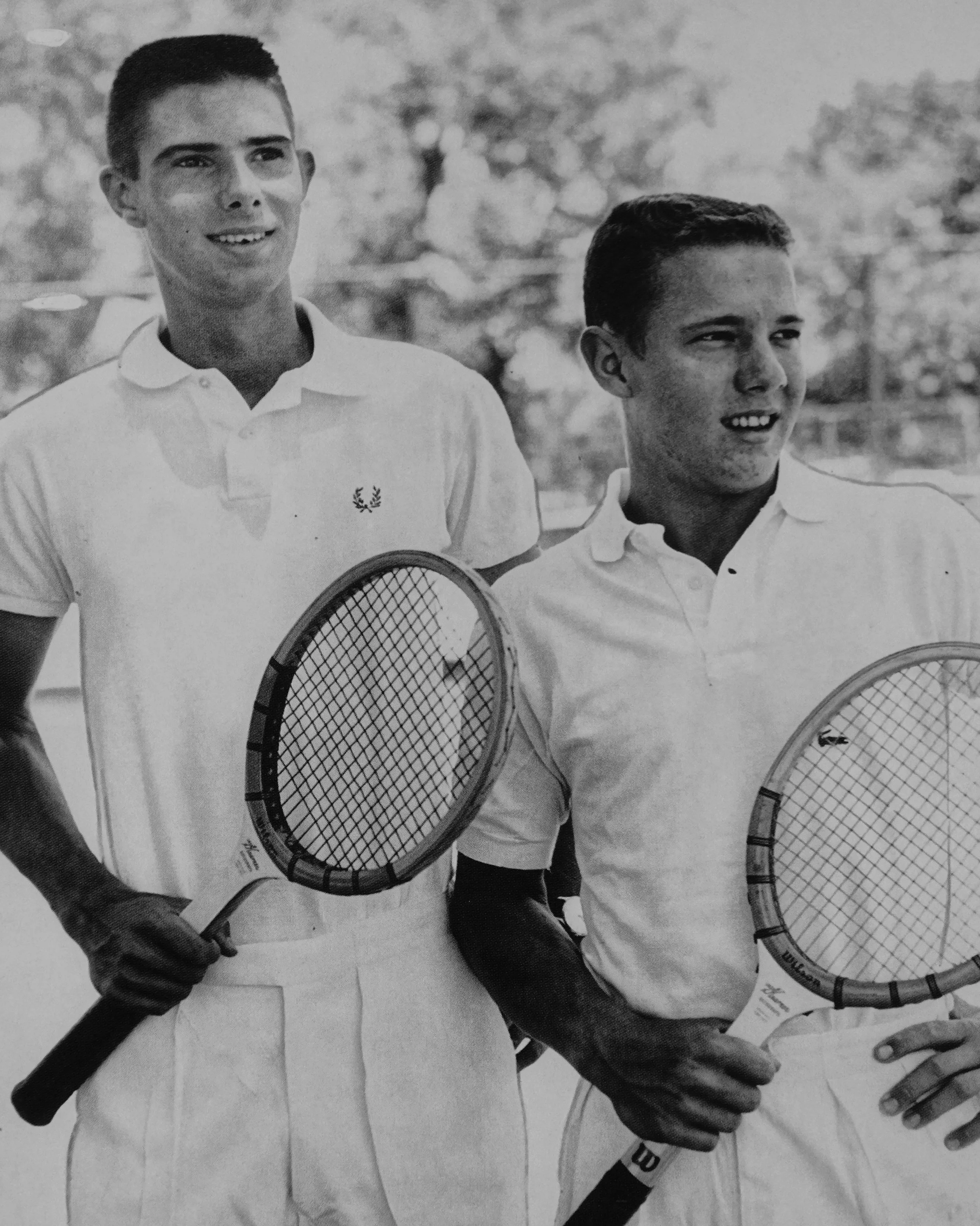
Butch Buchholz picked up a racket at three. He knew he was a tennis player around the age most kids are still learning to tie their shoes. He and his father Earl Sr. hit the road together, putting on trick shot exhibitions. Butch wowed the crowds with his skill and charmed them with his smile.
At nine, he was the Boys 12 Champion. At fifteen, he took home the Missouri Valley men's title. The prize was a silver tray engraved with mixed drink recipes. He was fifteen.
His junior year at John Burroughs, he was chosen to represent the US in international junior competition. He swept all four Junior Grand Slam titles: the Australian, French, Wimbledon, and US. The tennis world took note of the kid from St. Louis.
At nineteen, ranked fifth in the world and still under the drinking age, Butch turned pro. It would be the one decision he'd come to regret. He thought professional tennis was right around the corner. It was eight years away. And that road would be bumpy.
Like Father, Like Son
You can't talk about Butch without talking about Earl Buchholz Sr.
Earl Buchholz Sr. was one of three coaches who defined St. Louis tennis in the 50’s and 60’s, along with Bill Price and Richard Hudlin. He had no formal education, no fancy tennis credentials, just a racket and a bus pass. He traveled as far as Oklahoma to connect a St. Louis kid with the right doubles partner. When he put on a clinic, he put on a show. He’d bounce a ball off his shoulders one minute and teach a proper backhand grip the next. Tom O’Neal, founder of The St. Louis Tennis Hall of Fame, credits him with teaching more St. Louisans tennis than anyone else. Ever. His lasting legacy is the two sons who did more for the game than he ever dreamed.
Watching his father work a crowd, Butch picked up something no tennis academy can teach. Tennis isn’t about making contact. It’s about making connection. He carried that onto the court, and into every room he ever walked into.
He Covered a Lot of Courts
The world's best players weren't always allowed to play Wimbledon. Or the US Open. Or any Grand Slam. The fiercest match-up in tennis wasn't on the court. It was off it, between the wealthy who wanted to keep tennis a country club hobby and everyone else who wanted to make it a legitimate sport.
Butch was there before any of it changed. Before lucrative contracts. Before media attention. Before sponsorships. Being a pro meant piling into a station wagon, bus, or boat, traveling city to city for one-night stands across Europe and America. Before tournaments rolled out the red carpet for players, players had to roll out their own canvas court on gym floors, theater stages, ice rinks, whatever surface would have them, and play for a cut of the gate. At times, 29 matches in 31 days, 30 different beds. It was called the Jack Kramer Tour. They were called barnstormers. They loved the game and hated the grind. They wanted what golf had: a real tournament, a whole week, one city.
Butch came home to St. Louis and made it happen. He found sponsors, staged the first week-long professional tennis tournament in history, and watched other cities follow. It was his first real taste of promoting. He had it all mapped out since those days in the station wagon.
Then Wimbledon called. Butch was one of eight touring pros invited to play an exhibition on Center Court. The stakes couldn't have been higher. Fill the grandstands and professionals would be invited back to compete. Or go home and gas up the station wagon. The fans packed the stadium. TV ratings soared. The door to the Open Era cracked open.
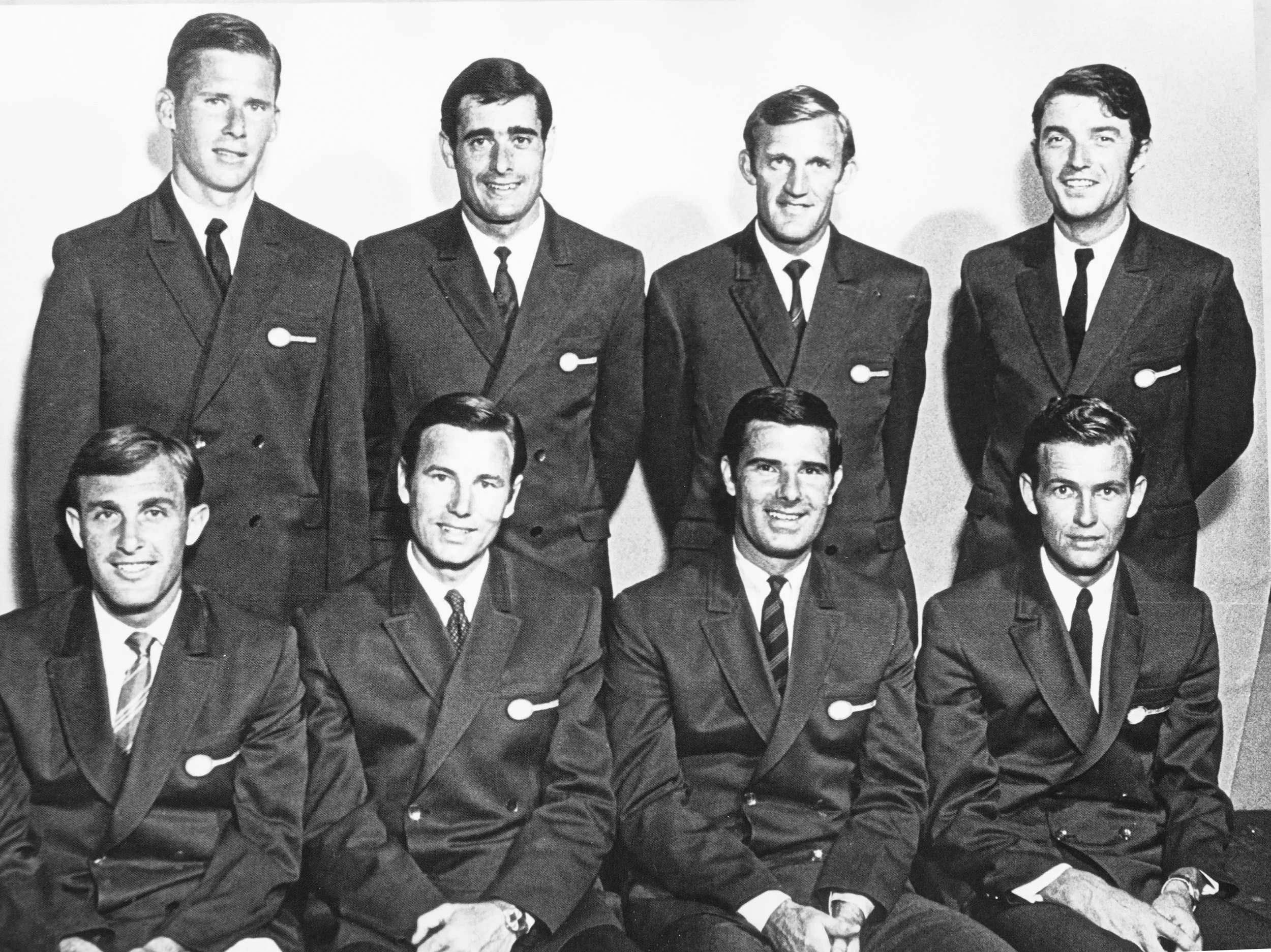
Six months later, Butch was one of the WCT's Handsome Eight who swung it wide. Young, stylish, charismatic, they took the court in colorful clothing, played with bright yellow balls, and introduced the tiebreaker. Their style was made for television. Crowds came. Money talked.
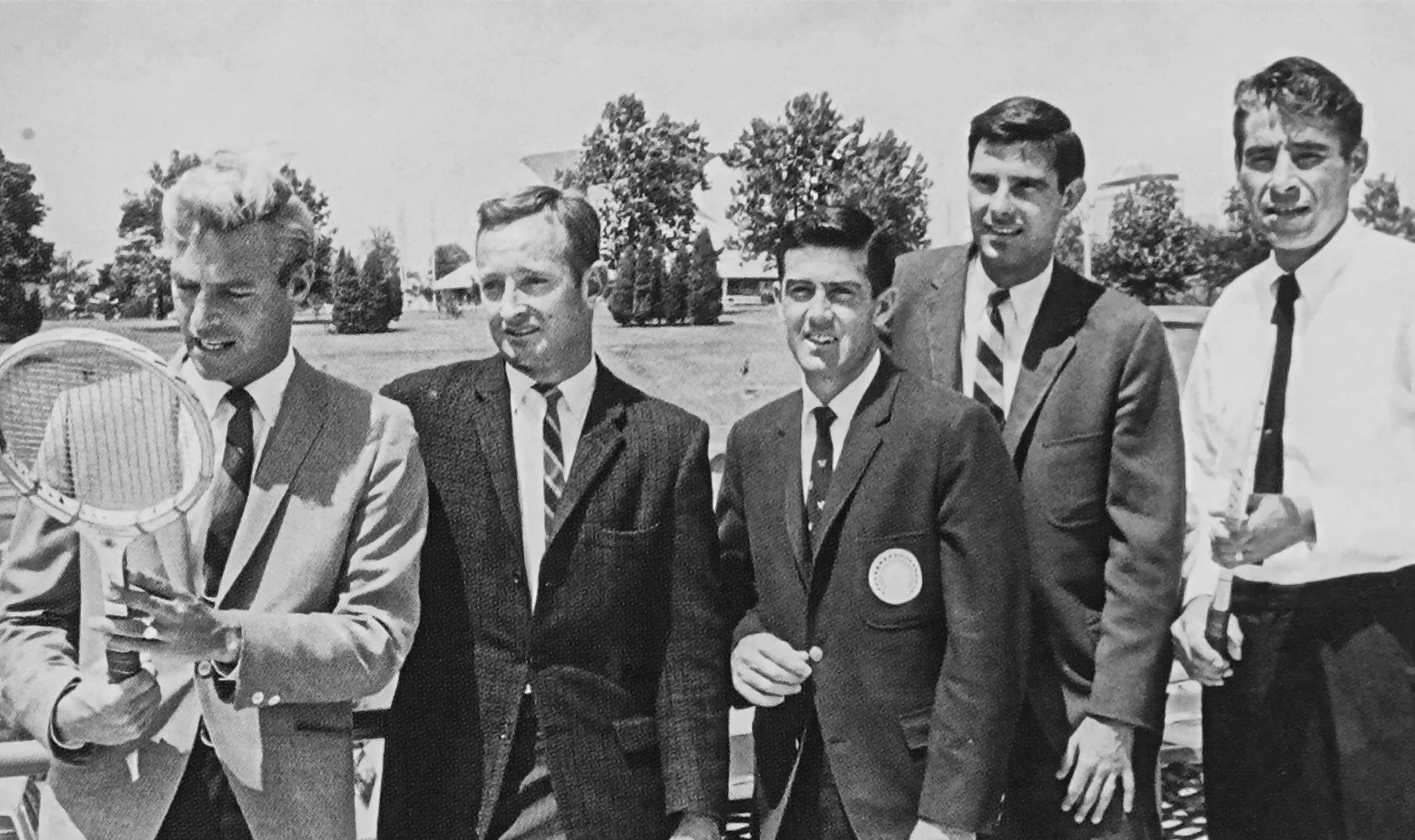
As a pro, Butch won 22 titles and compiled a winning record in Davis Cup. A chronic elbow injury ended his playing career before he ever got to compete in a Grand Slam. Hall of Famer Charlie Pasarell never forgot what Butch was capable of: "He would have won Wimbledon in 1960 if he hadn't hurt himself. He hit the ball as aggressively as anybody and could blow you off the court."
Butch did what his father would do. He found another angle.
He Came Home and Went to Work
Butch opened Town and Tennis, his first indoor racket club. Ten courts, just as indoor tennis was beginning to boom. He hustled day and night, cooking hamburgers, cleaning toilets, and giving lessons in exchange for business advice. He taught and he studied. It was a far cry from the tour. He couldn't have been happier.
He sold the club after 17 years and became commissioner of World Team Tennis and Executive Director of the ATP. He established the first player pension program in the sport's history. The program has since expanded to support up to 300 players annually, with more than $28 million in total contributions.
He Built Something Groundbreaking
Butch didn't want to run tournaments. He wanted to reinvent them.
The Lipton International Players Championships, now the Miami Open, started as an idea most people thought was too ambitious. He and his brother Cliff bought it together. Butch had the vision. Cliff ran the show. Ninety-six player draws. Two weeks. Men and women competing side by side on the same courts, at the same event, for the first time outside the Grand Slams.
When he opened the permanent stadium at Crandon Park in Key Biscayne in 1994, his priorities were split down the middle.
Half the stadium was devoted to the comfort and care of the players. The locker rooms had custom oak lockers with brass nameplates, meditation rooms, and an on-site hairdresser. He put a solid nine-foot wall behind the baseline so players wouldn't lose a fast ball against a crowd wearing white shirts. He had the TV cameras recessed directly into the ground so they wouldn't distract players or cut off movement on wide baseline shots. He knew exactly what frustrated players on tour. He had been one of them.
For the fans, he didn't just build a stadium. He created a festival.
Before Butch, watching a tennis tournament meant sitting quietly in your seat all day watching balls hit back and forth. He made tennis a spectacle, not just a spectator sport. He built a stage on the grounds and brought in live music between matches, offered gourmet food and signature cocktails, high-end merchandise, and dedicated social spaces where fans could relax between matches. Fans could enjoy all of that when they weren't watching the world's best tennis players. It was a tournament like no other.
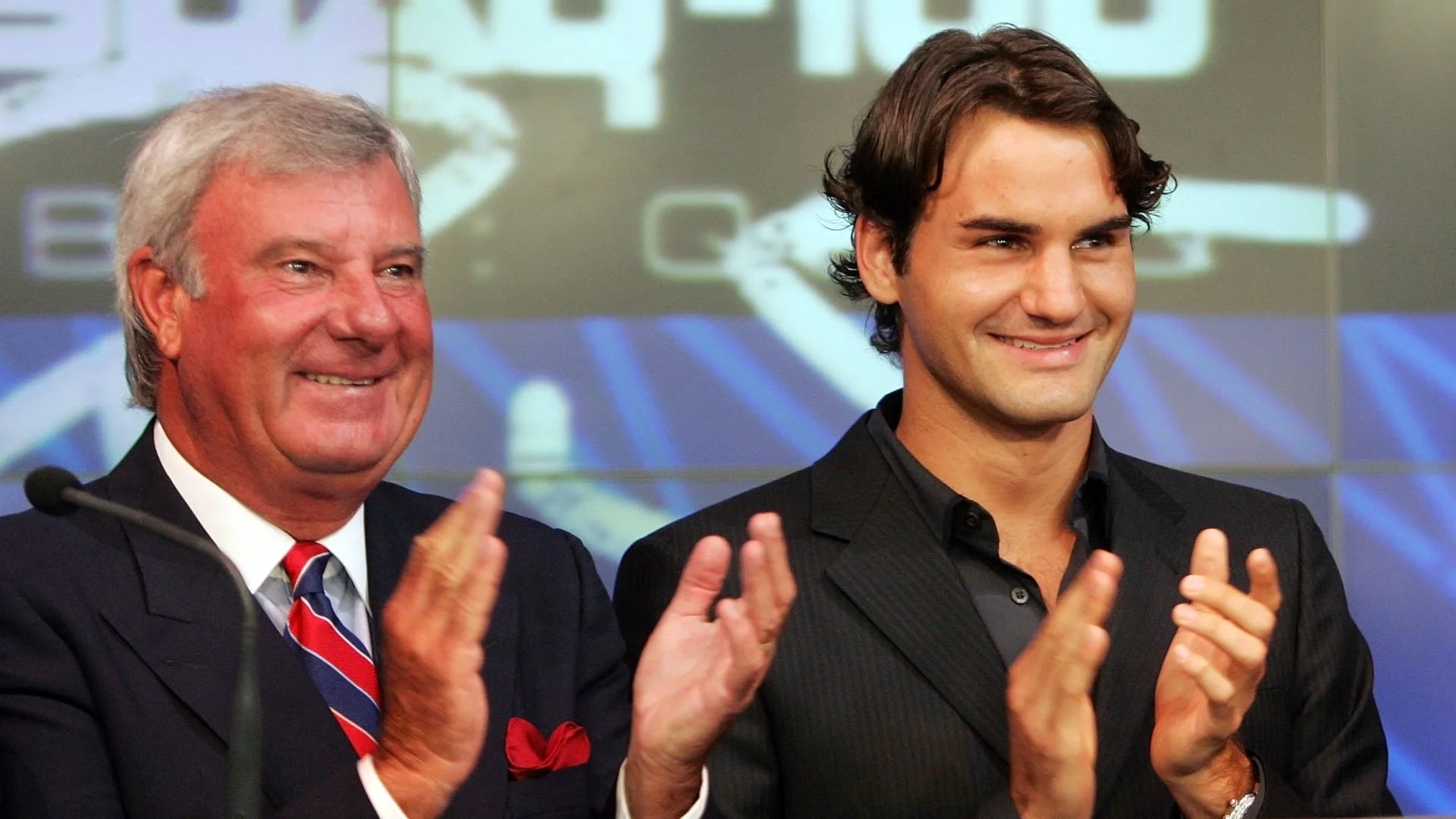
Today it draws 420,000 spectators. Many consider it tennis' fifth Grand Slam. Butch sold the tournament in 2000 but remained tournament chairman for another decade.
He wasn't finished.
Butch noticed that Latin American players were being underserved. He launched a series of ATP Challenger Tour events across seven cities through Altenis, a management company he founded with partner Joaquin Blaya. They raised prize money to $100,000 per tournament so Latin American players could afford to travel and earn enough ranking points to make tennis their career. Before the tour, a Latin American player in the top 100 was rare. In 1998, Marcelo Rios became the first Latin American player to reach World No. 1, completing the Sunshine Double by winning both Indian Wells and Miami. Today the Miami Open is widely known as the Grand Slam of Latin America. Butch made sure their road to the pros wasn't bumpy.
He kept the Orange Bowl, the preeminent junior tournament in Florida, alive and running, giving young Latin American prospects the international exposure they need to break through.
He remembered what Jack Kramer said to him when he turned pro in 1960. “Junior, try to make the sport better for the next guy when you leave.” He and Arthur Ashe built the Ashe-Buchholz Tennis Center in Miami's inner city. Two kids from St. Louis who knew what the right opportunity could do, making sure other kids had one.
Ray Moore, South African touring pro and fellow Hall of Famer, once said: "Butch Buchholz was the best player that never won a major."
He never got his shot at one. But Rod Laver saw early on what Butch would do instead. "In 1964 or 1965 he said we hadn't even scratched the surface of tennis," Laver recalled. "He had a vision."
The last time he hit a tennis ball was Center Court, Wimbledon, 2018. The tournament had just wrapped up. The grandstands were empty. He had nothing left to prove.