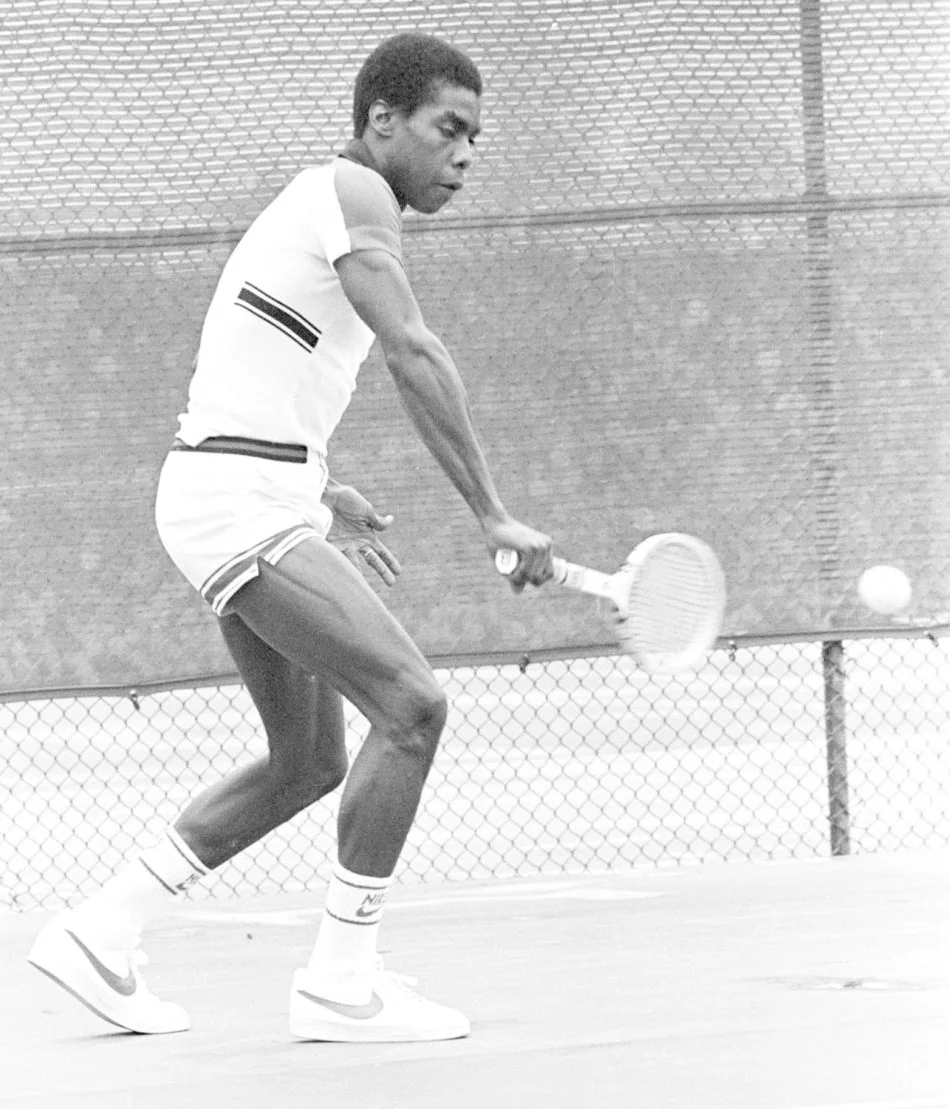
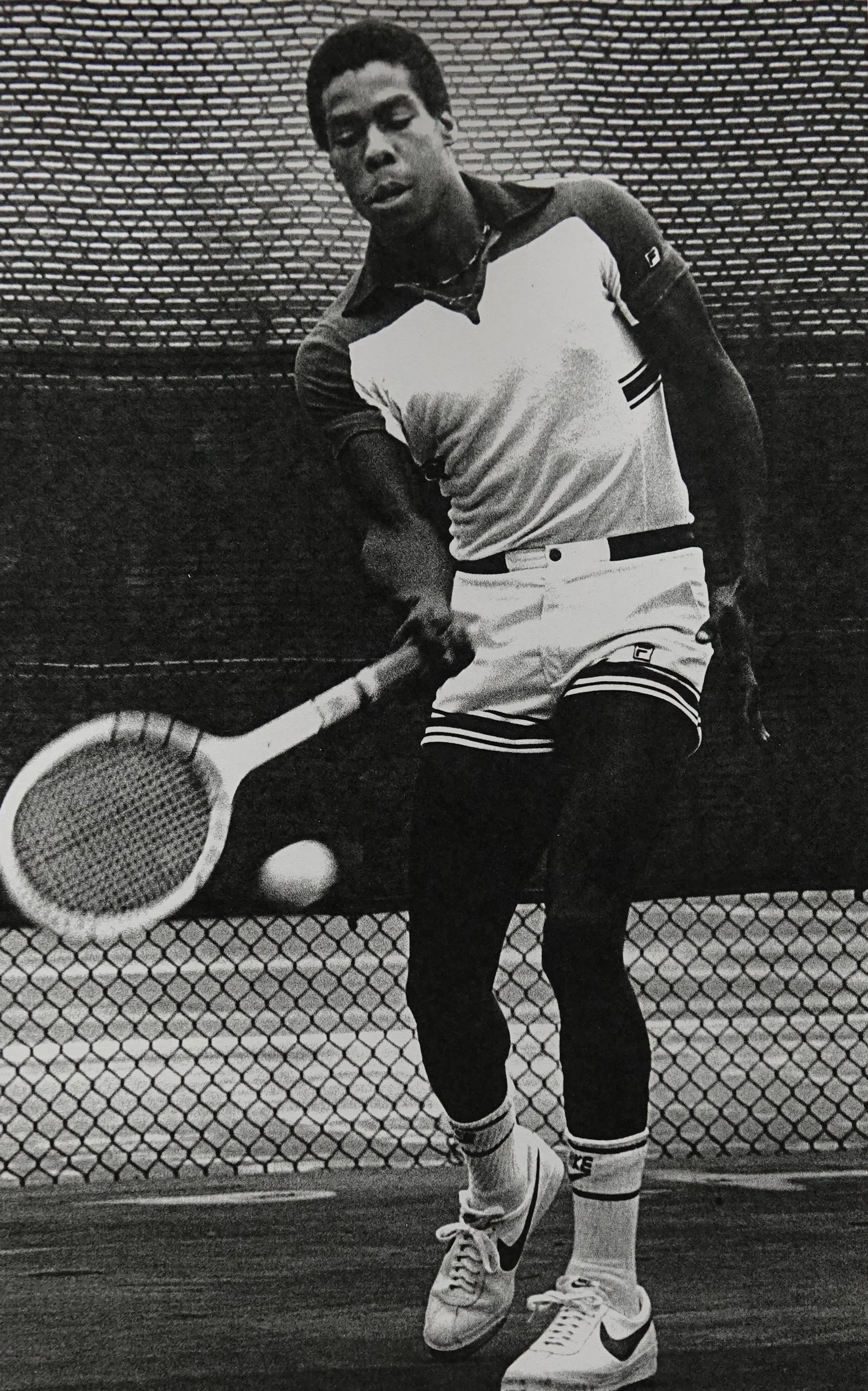
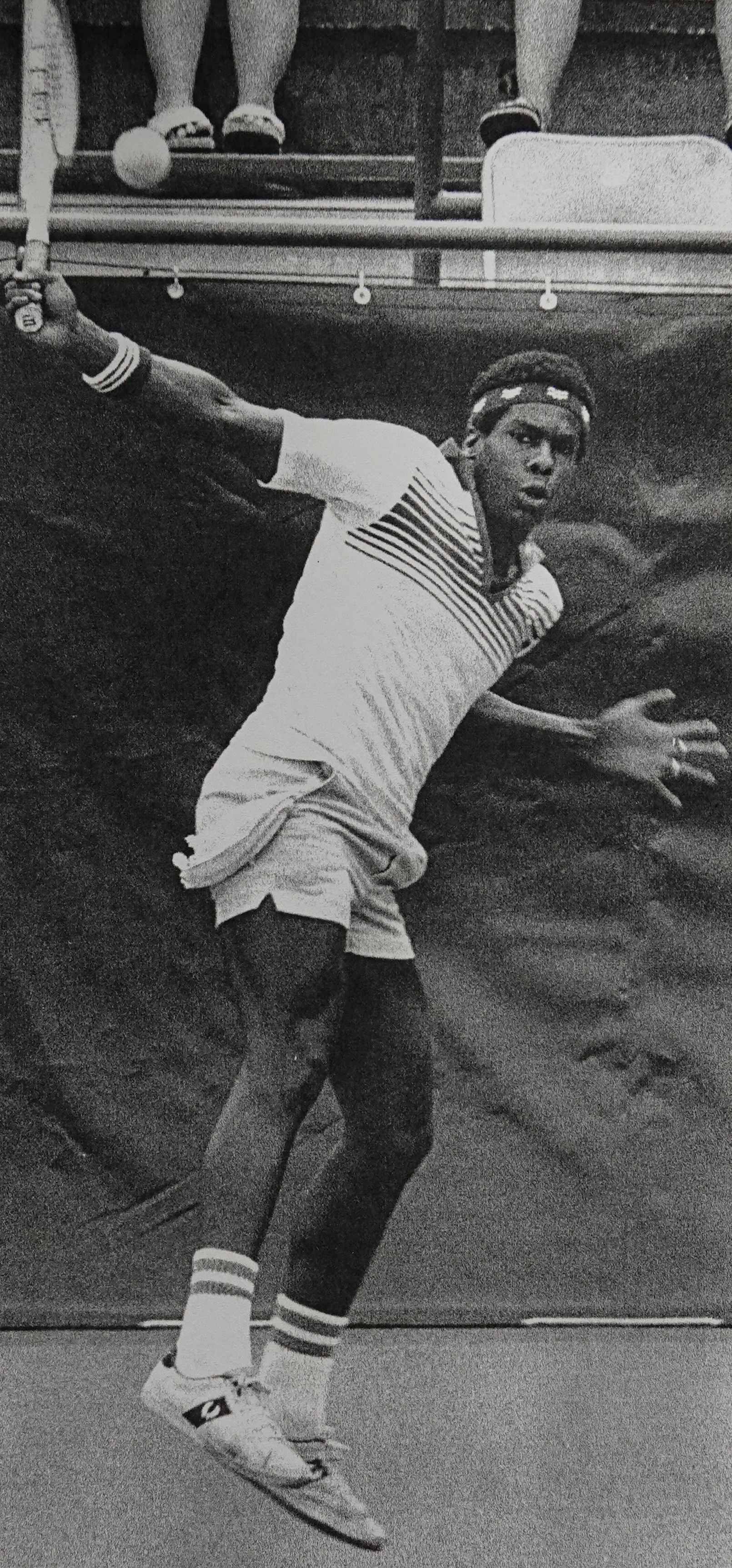
At four years old, most kids are grabbing crayons. Juan Farrow was gripping a broomstick.
His neighbor in Lynchburg, Virginia was Dr. Robert Johnson, the same man who trained Arthur Ashe. The way Johnson saw it, if you can hit 500 balls consecutively with a broomstick, you'll have no trouble finding the center of a racquet. Farrow earned his racquet after five months. He started competing at seven. Winning at nine.
When Dr. Johnson died, Farrow followed the same path Ashe had taken before him. To St. Louis. To Richard Hudlin. To Sumner High School. Hudlin, who was in his seventies, recruited Arthur Ashe to bridge the generation gap. Ashe brought his idol, Pancho Gonzalez, a Mexican-American who understood exactly what it meant to be a minority in a historically white sport. Together, they taught Farrow how to win. And how to play the game.
Farrow won three state singles titles.
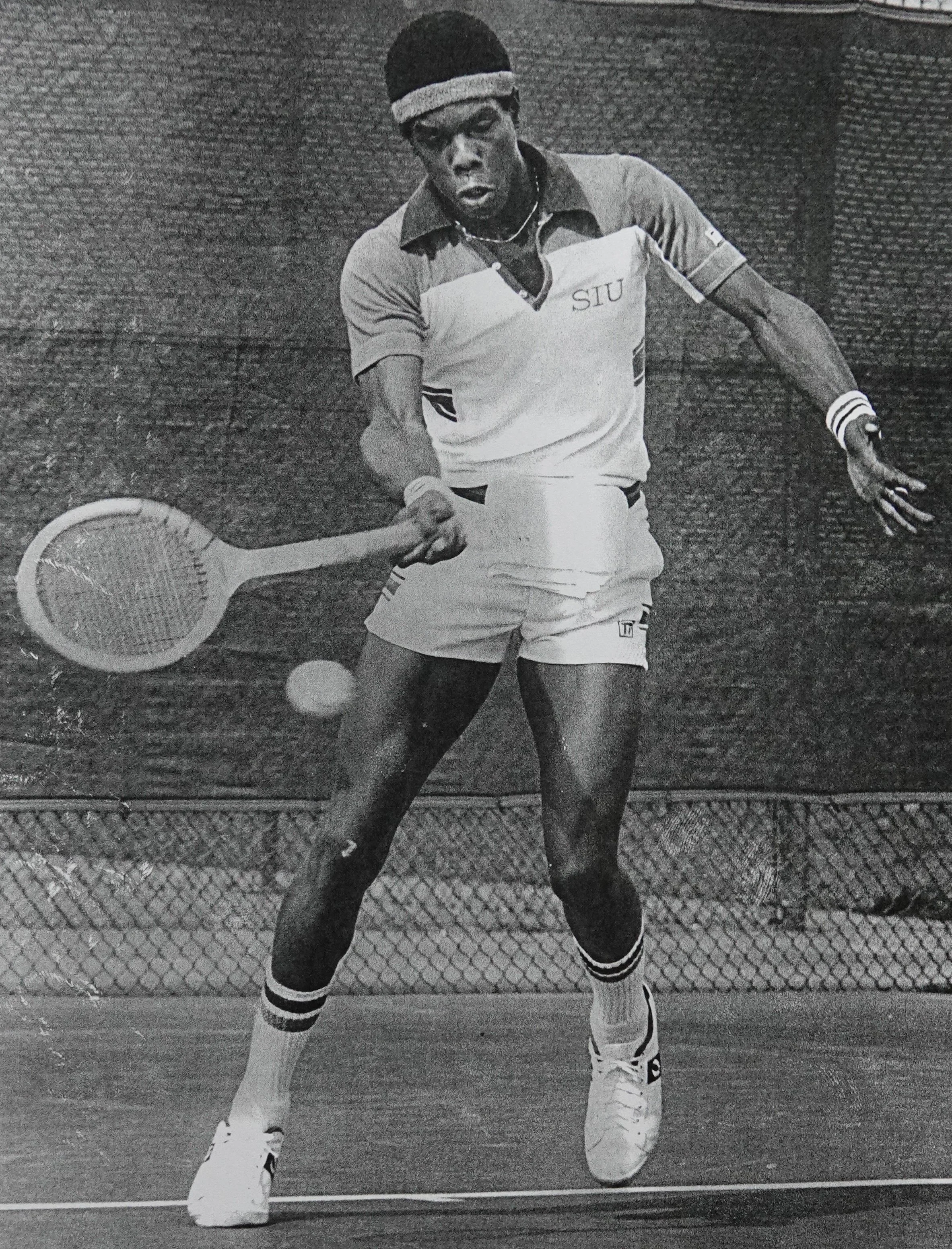
UCLA and Stanford came calling. Farrow had other ideas. "I wanted to play against those schools," he said. "And beat them." He enrolled at SIU-Edwardsville and won three NCAA Division II singles championships and became an eight-time All-American.
He turned pro in 1980. The sponsors were hard to find, the stops and starts were many. "I've played all over the world," he said. "The U.S. Open, the French Open, the Australian Open. I've had to stop and regroup."
It was never about the accolades. It was about the work.
(2022)
JUAN FARROW