THE INNOVATOR
"I'm a lousy Latin lover. But I've always been a good mechanic." - Ed Serrano
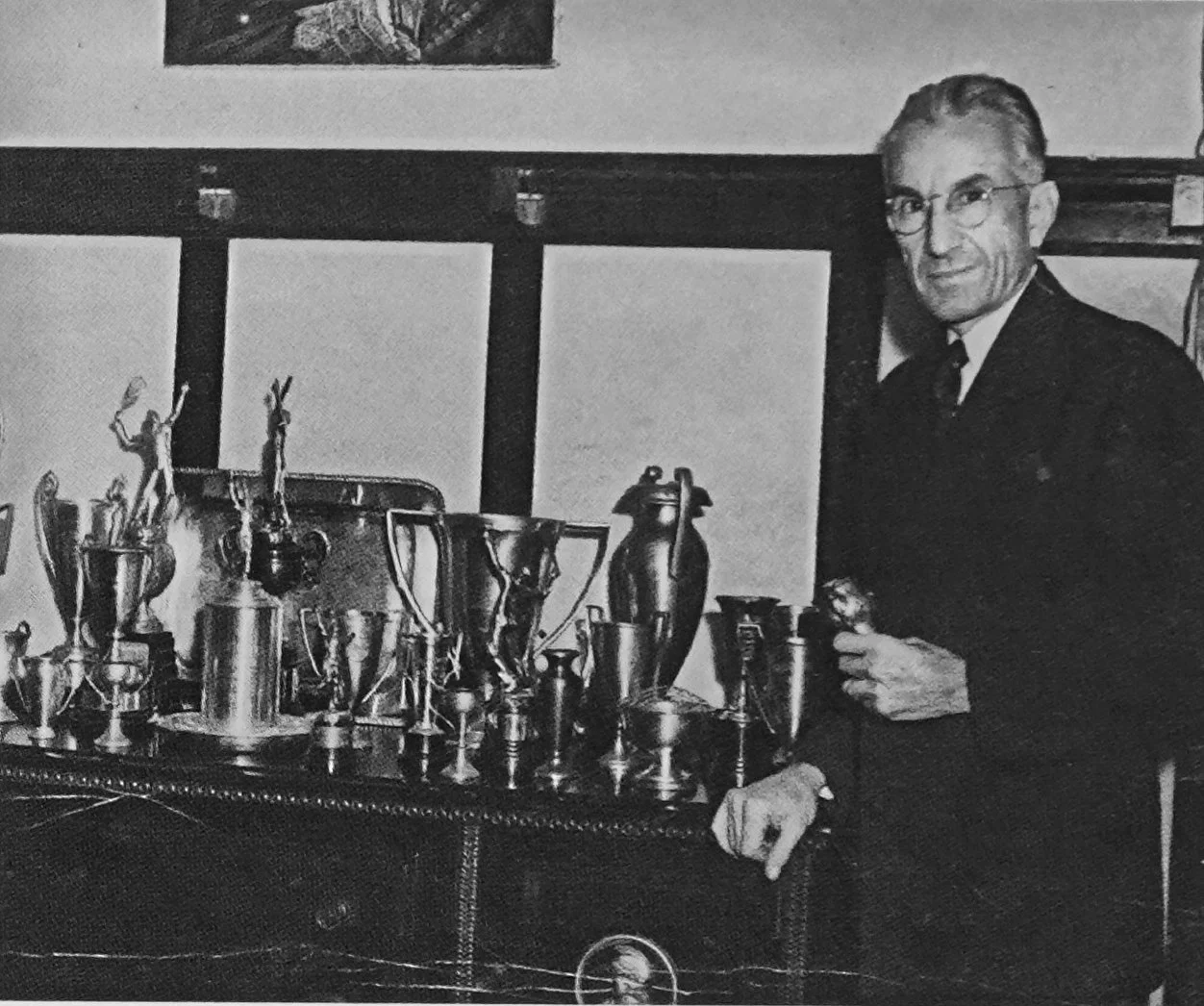
Edmund "Ed" Serrano was born in Mexico and came to St. Louis at age 10, the son of the Mexican consul to the United States. He won the city's first high school tennis championship in 1905, designed a right-hand-drive car with no headlights and patent leather fenders, drove speedboats on the Mississippi, got his pilot's license, and partnered with the Listerine heir to buy a gold mine in California. For Serrano, inventing two machines that changed tennis forever was just another Tuesday.
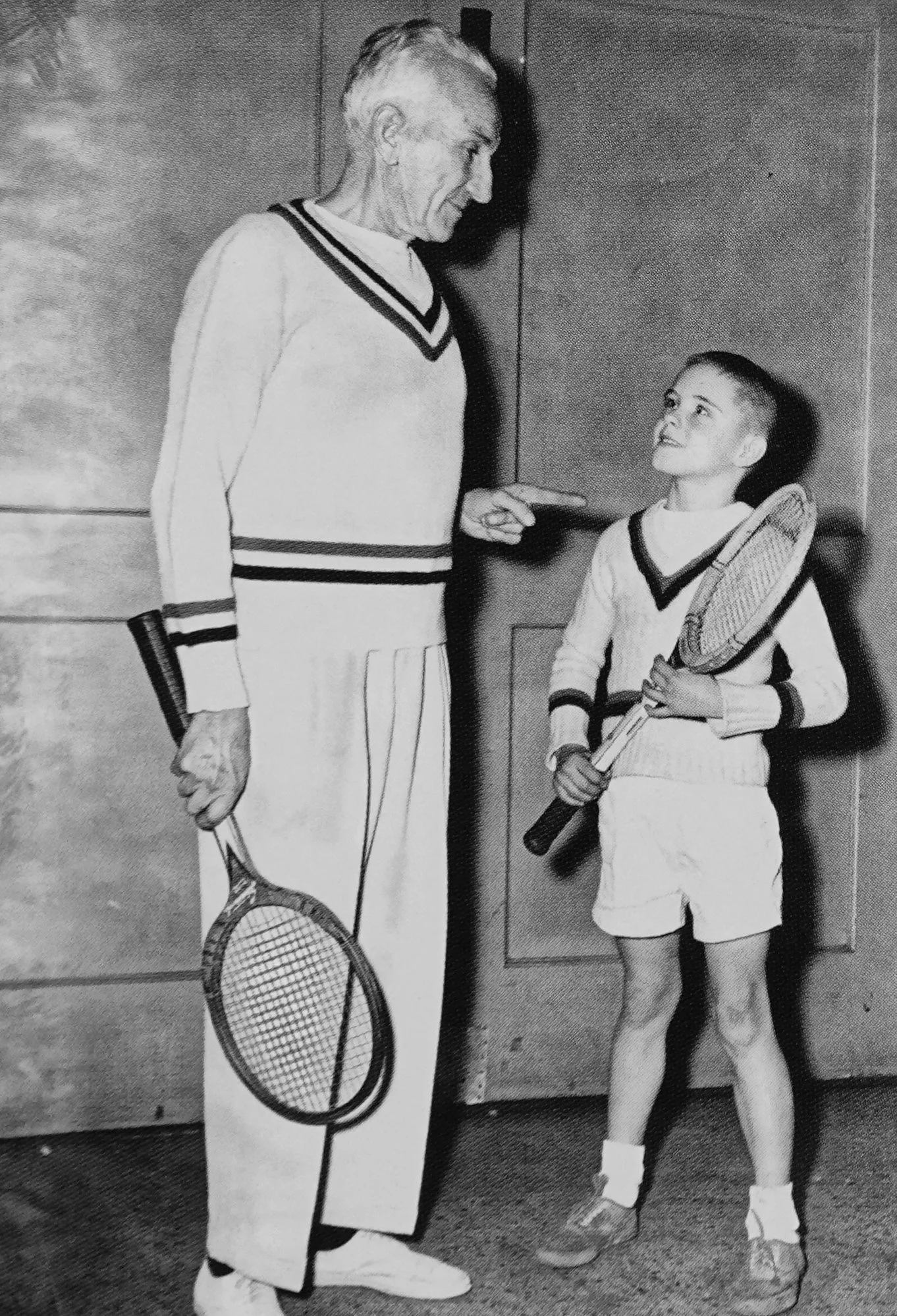
He competed in major tournaments across Europe and never stopped playing. When his son Spud was old enough, he taught him the basics. But he couldn't always be there to feed him balls. Most fathers wouldn't think twice. Serrano built a machine.
The Tennis Robot
In September 1934, Serrano debuted the Tennis Robot to the public at the West Side Tennis Club in Forest Hills, New York, home of the U.S. Nationals and the most prestigious club in American tennis. René Lacoste had built a hand-cranked wooden prototype in the 1920s, but it needed a second person to operate it. Serrano's Robot worked on its own. The machine could fire up to 90 balls across the net at varying speeds, angles, and spins. It could serve, slice, and drive. A player could choose to work on one shot, or mix drop shots, volleys, and lobs. It even replicated what a player would face in a real match, without the questionable line calls.
Within a few years it was showing up everywhere. Forest Hills to Beverly Hills. University courts to private clubs. And around the world. Then came World War II. Parts became scarce and production slowed. After the war, sales boomed and the Tennis Robot resumed shipping globally.
Half a century later, a young Andre Agassi is in Las Vegas hitting 2,500 balls a day off a custom ball machine his father called "The Dragon." Andre says it's what gave him his famous fast hands. His father may never have heard of Ed Serrano. But he understood what Serrano understood. That machine doesn't get tired. It doesn't go easy on you. And it shows up every day.
The No-Awl Racket Stringer
That same year, Serrano introduced the No-Awl Racket Stringer. Before it existed, stringing a racket meant sitting down with an ice pick and a thick needle called an awl, painstakingly pushing string through each hole in the frame by hand. The No-Awl eliminated all of that. A drop-weight machine with removable clamps, it made stringing easier, faster, and tailored to each player. Tighter for more power. Looser for more control. Within a few years, more than 1,000 dealers worldwide were selling it.
On the barnstorming tours, players strung rackets on portable vices clamped to hotel room tables or stadium benches, pulling gut by hand and guessing tension by the pitch of a plucked string. In the era of wooden rackets, a single slip of the awl could slice the gut or ruin the frame. Players compared watching their favorite racket get strung to a person stretched out on a medieval rack, waiting for the splintering crack.
When a venue had a Serrano machine, they could breathe. The clamps held. The awl was retired. Their frame survived.
Today's tour players restring multiple rackets a day, sometimes during a match itself. Humidity tightens strings. Heat loosens them. Wrong tension at the wrong moment and a shot that should be a winner lands in the net. Or it lands a player on the sidelines with a sore elbow.
The right stringing job can mean the difference between great and legendary.
Roger Federer and Novak Djokovic attribute their success to their stringer. Federer claims precise changes in tension were the difference between landing a shot and missing it in a tight match. Djokovic admits the right stringing unlocked spin he couldn't always generate on his own. They owe it all to Ed Serrano.
A Concrete Connection
Serrano and Ted Drewes Sr. were rivals on the court and partners off it. In 1929, Serrano became the first person to invest $5,000 in the frozen custard stand his old friend had just opened. Decades later, Ted Drewes Jr. invented the concrete. Not a bad return.
Serrano passed away in 1985. He was 99. He lived life at 100.