
The Innovator
LOREM IPSUM - Header text goes here
Born to Change the Game
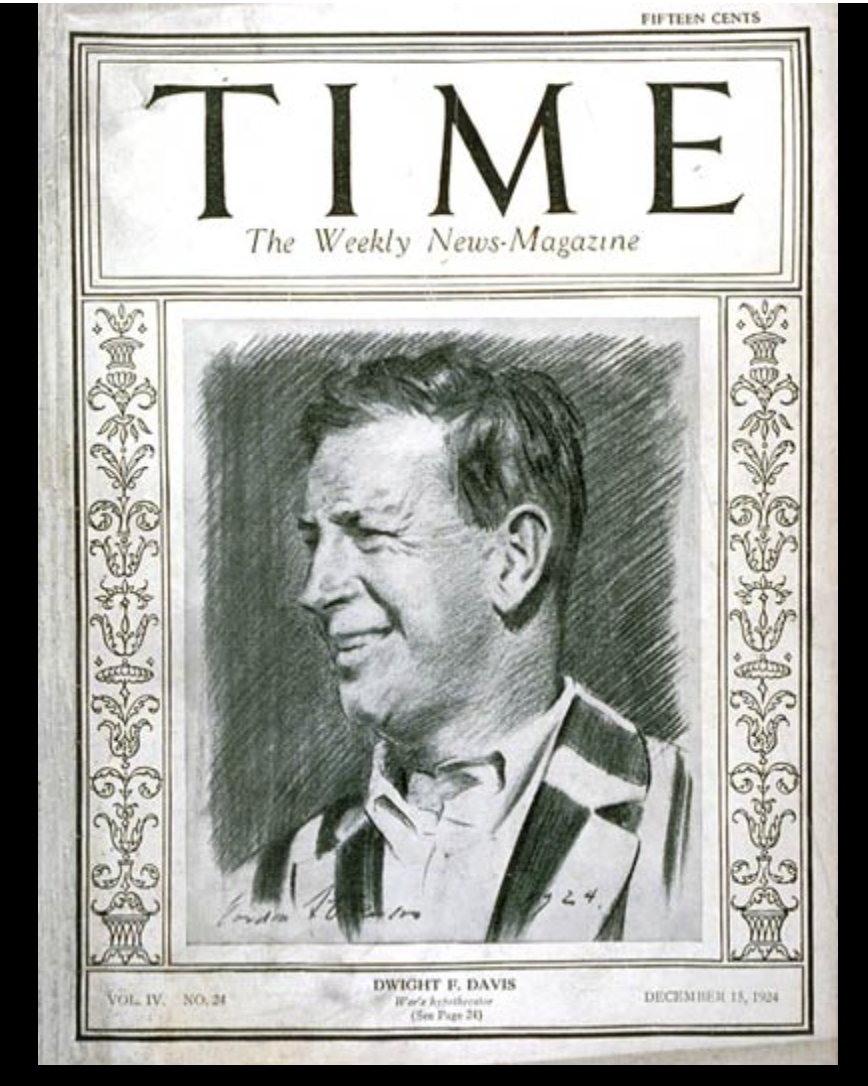
Dwight Davis was born with every advantage, but he chose to level the playing field. He excelled at Smith Academy, Washington University and Harvard. His legacy, though, was shaped by what happened outside the classroom, on a patch of grass in Nahunt, Massachusetts.
That's where his uncle set up a court. On the very same spot where lawn tennis was introduced to America just a few years earlier.
Davis picked up a racket that day and never put it down.
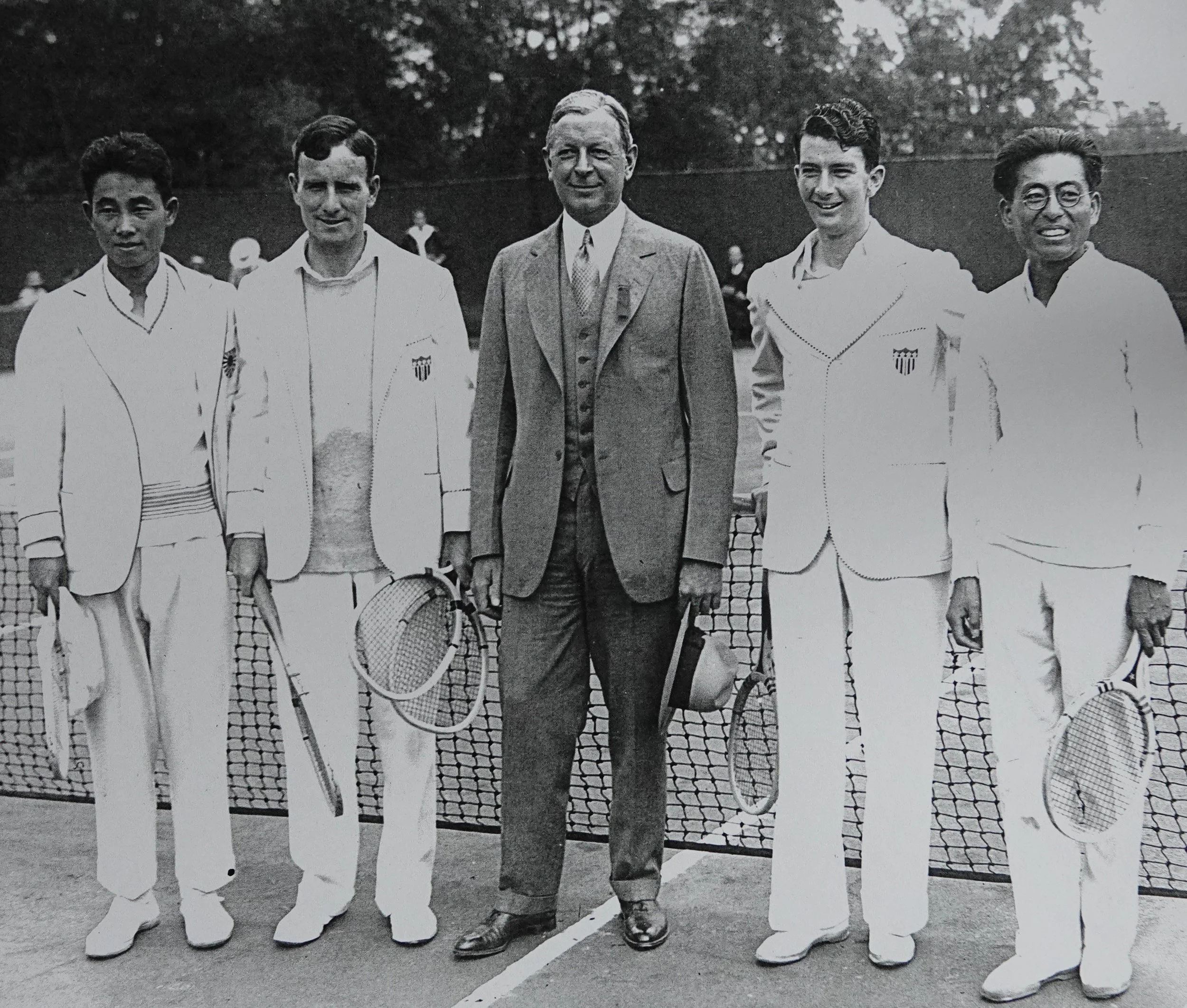
As a player he was good. Really good. He won the U.S. Intercollegiate title in 1899, cracked the national top 10 four times, and won the U.S. championship twice. He also picked up three U.S. doubles titles with his partner Holcomb Ward. He was still competing at 57, taking home the U.S. Veterans (over 45) Doubles Championship. He loved the titles. But he wanted to be remembered as a champion of the people.
How a Silver Cup Turned into a Pot of Gold
By the late 1890s, tennis had a popularity problem. Golf was having a moment with America's wealthy. Tennis was losing ground fast.
Davis had watched yachting regattas bring countries together and thought, why not tennis? An international competition could create goodwill and give the sport a badly needed boost.
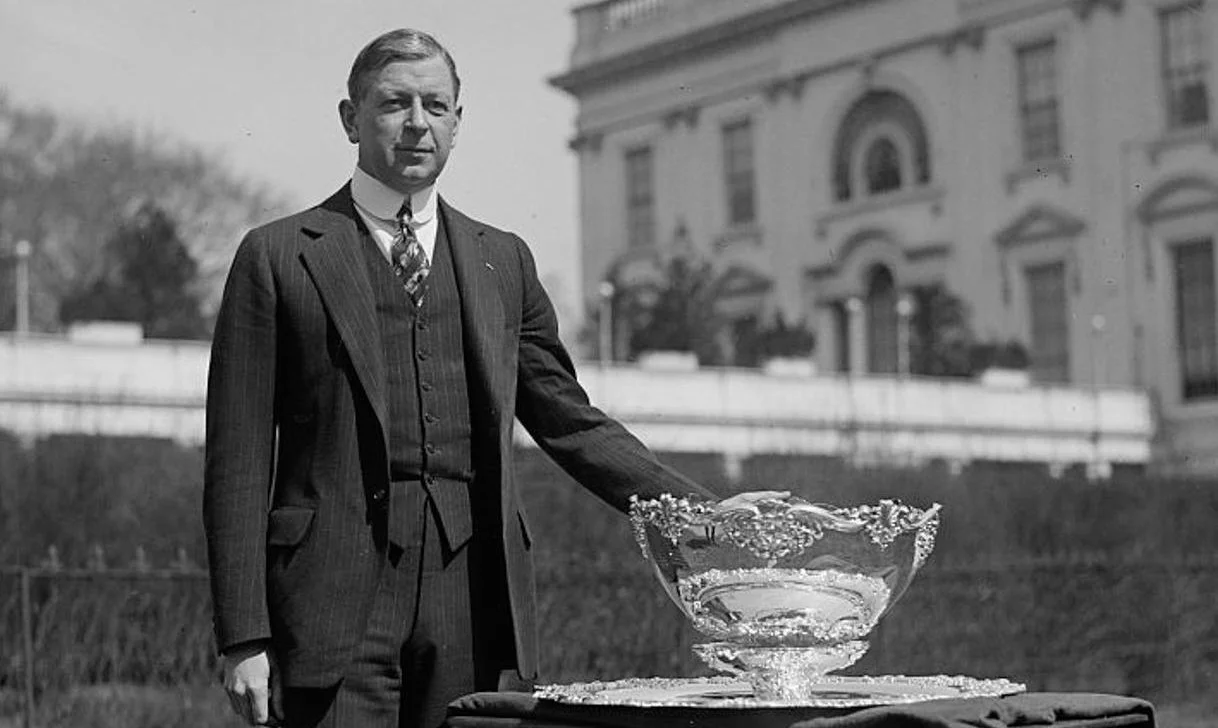
He called it the International Lawn Tennis Challenge Trophy. He bought a silver bowl from a Boston jeweler, which his teammates called Dwight's Pot, organized his team and in 1900 they beat the British. It was a big win for the Americans. A bigger one for tennis.
Dwight's Pot became the Davis Cup. Today, 130 countries compete for it every year. It’s the largest annual team competition in sports.
Shortly before his death, Davis reflected on what he'd started. "If I had known of its coming significance, I would have had it cast in gold rather than silver."
He Laid the Groundwork
After Harvard, Davis came home to St. Louis not as a tennis star, but as a civic-minded progressive on a mission. He started law school but didn't finish, choosing the public parks over private practice. His mentor Robert Brookings believed recreation could do what politics couldn't. Build a city's character from the ground up. Davis took that idea and ran with it.
As St. Louis Park Commissioner from 1911 to 1915, he ordered every "Keep Off the Grass" sign taken out of every city park. He opened every tennis court in the city to anyone, for free. His goal, he said, was to grow men and women. Not grass and trees.
When people asked why kids weren't playing sports, Davis knew the answer. They'd grown up seeing those signs their whole lives. They didn't think the parks were for them.
He changed that. When Davis became president of the USTA, he pushed for free public courts nationwide. By 1922, St. Louis ranked third in the country for tennis, with 191 courts across 39 clubs, in a city that ranked seventh in population. Think about how many generations of players have learned the game on a public court, for free. The U.S.T.A. credits one man.
The signs came down. The courts went up. And tennis was never the same..
More Than a Tennis Player
A Rutgers professor who spent years studying Davis put it plainly: "Almost single-handedly, Davis changed the purpose and makeup of America's parks into public parks tennis."
Davis was Secretary of War, Governor General of the Philippines, an Olympic tennis player, and the man who opened America's public parks to everyone. He helped build St. Louis's public recreation system, bringing golf courses and baseball diamonds into the parks alongside the tennis courts. He chaired the Brookings Institution, one of the most respected think tanks in the world, for eight years. He accomplished all of this. And still, most people have never heard his name.
He Still Holds Court
Go to Forest Park today and you'll find the Dwight Davis Tennis Center. It's not a monument, or a shrine. It's a place to play. Just like Davis intended. Home to wheelchair tennis championships, junior programs, and thousands of St. Louisans who learn the game every year.
The Davis Cup he started as a college student is now played by 130 countries. The overhead smash he invented is hit every day on courts around the world. So the next time you walk onto a public court anywhere in America without asking permission, you can thank a St. Louis kid who decided the parks belonged to everyone.