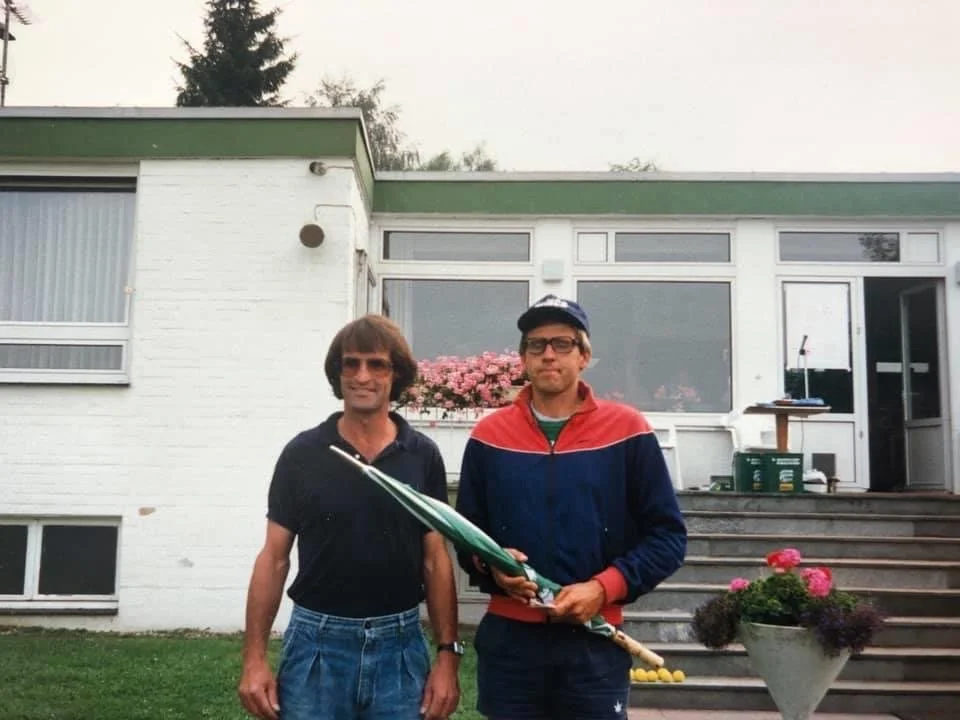
what’s up with…craig sandvig?
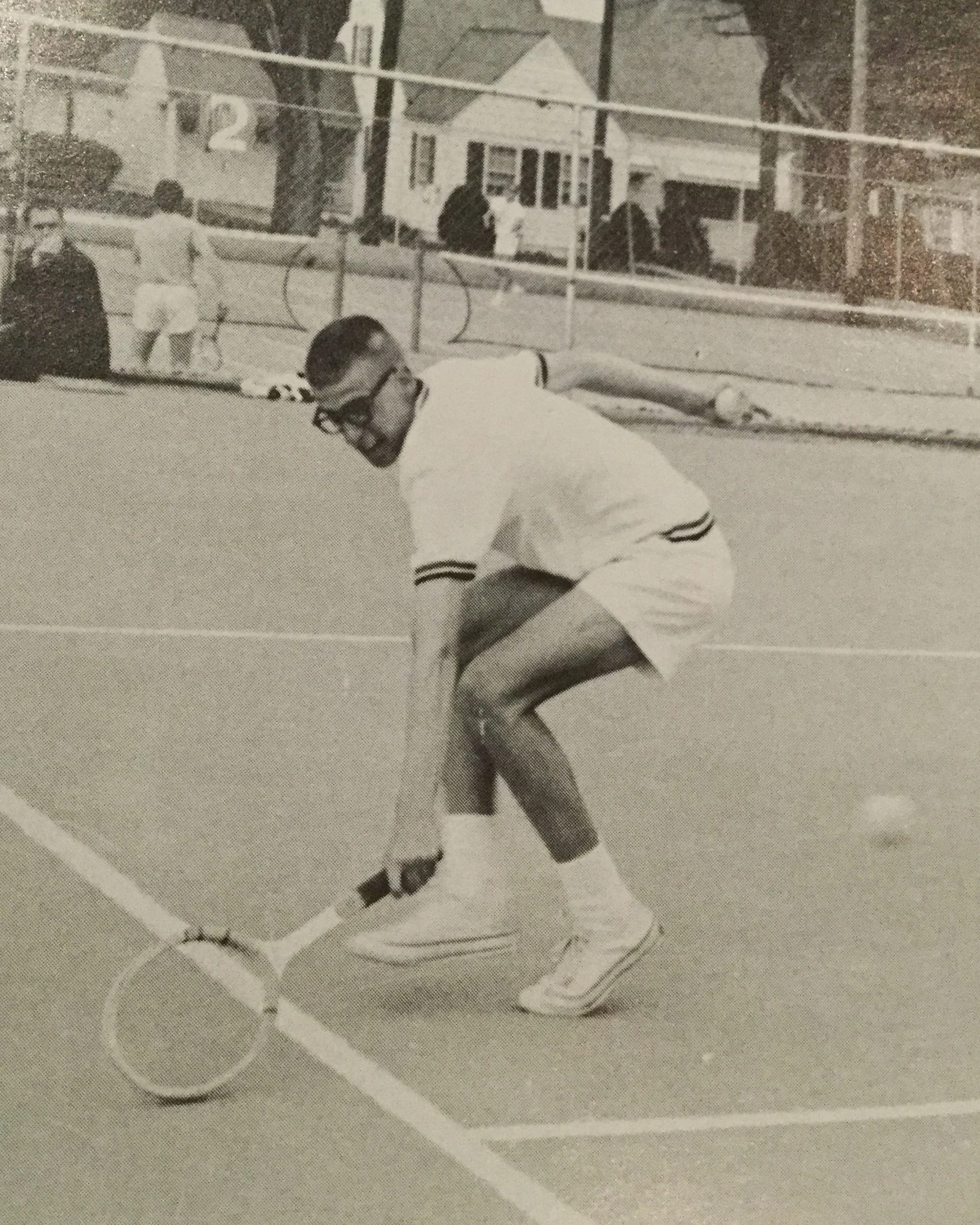
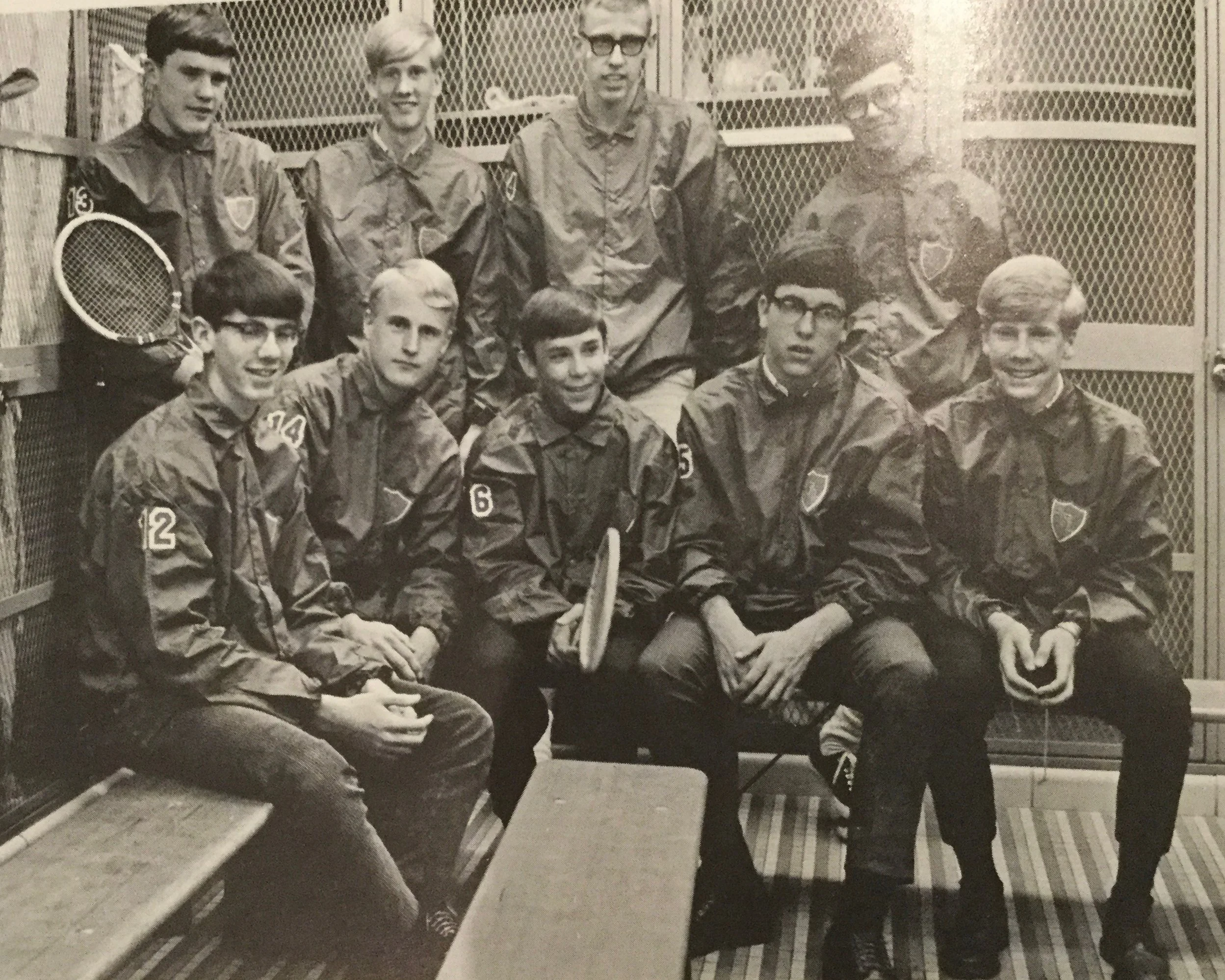
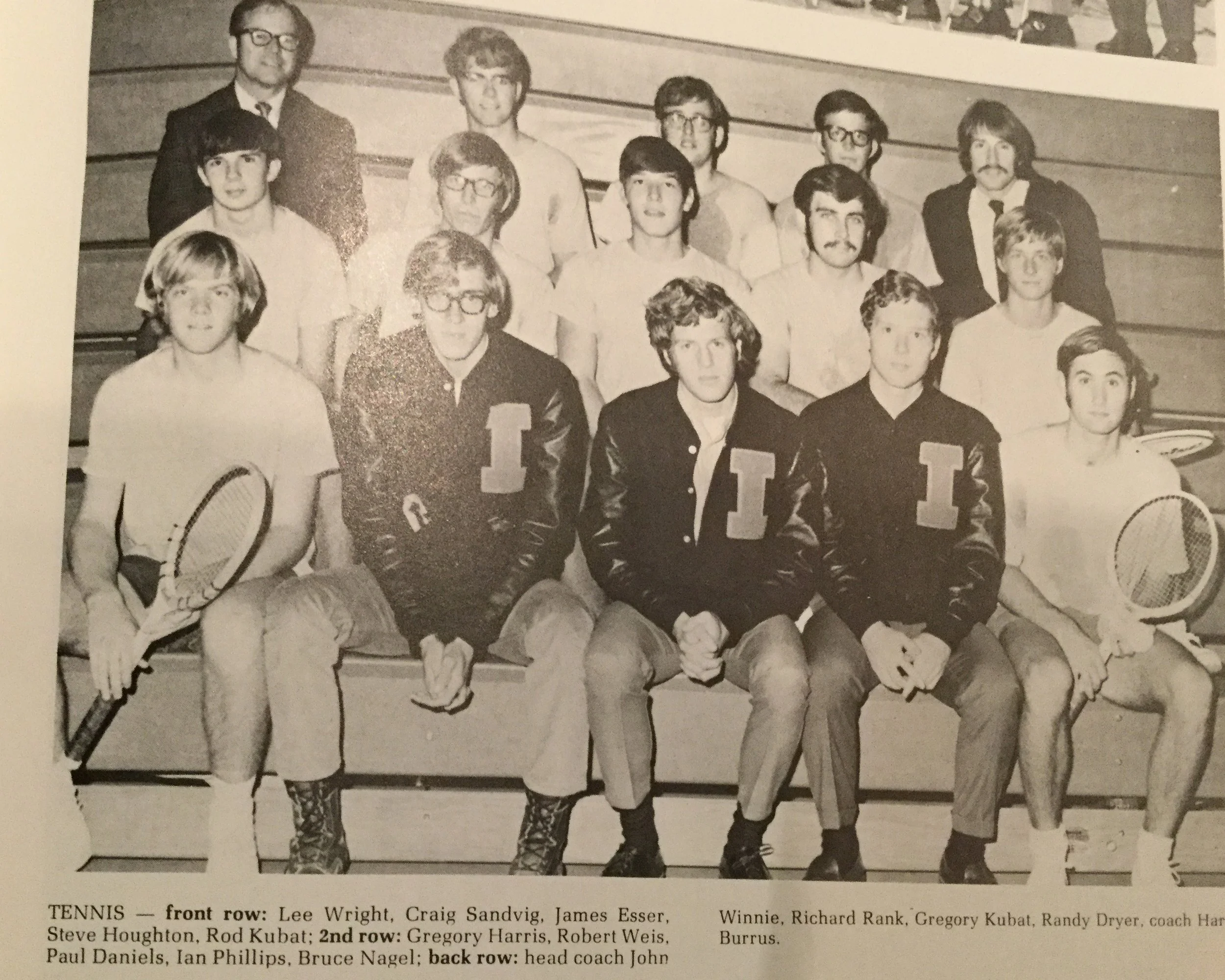
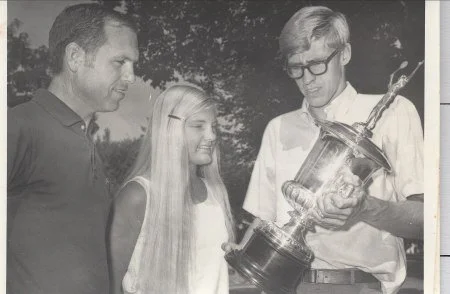
When he was a tennis player at Iowa, Craig Sandvig was named the university’s top scholar-athlete for all sports – a lofty honor to be sure.
From Iowa he came to Washington University to study political science, intent on earning a PhD.
He was well on his way, and then darned if tennis didn’t step in and say “hold on, I’m not done with you.” Craig received neither a master’s nor a PhD.
“Somehow I lost my way,” he said. “If I had it to do over again, I would have taken a year off from school and worked and then I think I would have had a better focus for graduate school. I regret not having my PhD, but I don’t regret what I’ve done.”
What Craig has done over the past half-century is he’s taught tennis to thousands of players young and old in a career that has landed him in three tennis halls of fame and brought him a slew of awards, including, at the St. Louis District/Missouri Valley level, the Distinguished Service Award in 2013.
He’s been as solid as a rock, giving lessons and running clinics at the same place – Sunset Tennis Center – for 46 years, until that streak ended this summer, when Craig resigned.
Starting Sept. 1, Craig will be a teaching pro at Chesterfield Athletic Club.
Three teaching pros from Sunset (now Vetta Sunset) will join Craig at CAC: Billy Gluck, Rachel Pierson and Taylor Tyre.
Now, at age 74, after 46 years at the same club, Craig feels like a kid starting at a new school.
“I’m nervous,” he said. “It’s going to be different.”
Craig grew up in Sioux Falls, South Dakota, where he and his three younger sisters gravitated to tennis when the family moved to a house just three blocks or so from a park that had tennis courts. In high school, Craig won five state championships in singles and doubles – players could play both singles and doubles in the state tournament, Craig explains, because in Sioux Falls “there weren’t many players there.”
After he graduated Phi Beta Kappa from Iowa, he headed south to WashU for grad school.
“The truth is that I’d been at a big school in a small town,” he said, “so I wanted to try a smaller school in a big town.” He coached the Bears’ tennis team and worked at St. Louis Indoor, where he manned the desk except when the club needed more tennis instructors. When pro Gloria Connors left, the owner asked Craig if he’d serve as pro, “and I’ve been doing it ever since.”
Shortly thereafter, in 1977, Craig got an offer from Sunset owners Bob Quevreaux and Bob Striler, and thus began his 46-year run there.
He was soon joined by his fellow Sioux Falls native Doug Smith, and they put together a junior program that became the best in St. Louis if not the entire region. Some 20 years later, Craig had to be away because of a family illness, and once he saw the junior program was thriving without him, he made a change to focus on adults, particularly adult women.
“I moved over and tried to keep the club busy during the day.” Known affectionately as The Ladies Man, he said, “They can do things during the day and we had court hours to fill, and they’re fun and eager. We had a really good time.”
A lot of those ladies are expected to follow Craig to CAC.
There came a point when Craig and Doug Smith
were minority owners at Sunset, with
Quevreaux as majority owner. When Quevreaux
died in 2013, Craig and Doug chose to sell.
“By that time, we were older and it probably wouldn’t have been best for us to take it over,” Craig said. “It would have required a substantial investment in time, money and energy, and we were old enough that that probably wasn’t going to work.”
For a long time Craig had been a workaholic, working seven days a week. Finally, his wife, Lois, told him he needed to take a day off to spend with her.
“She’s regretted it ever since,” Craig said with a chuckle. “She might want to rethink that if you give her the opportunity.”
It might be time for Craig to think about retirement. Or maybe not. He has no plans to do any such thing.
“I’m afraid if I retire I’ll sit in my room and read and think about stuff, and that probably is not good,” he said. “It can’t be good for your mental health or your physical health.”
How so?
“Every once in a while I have to cut myself off from the news because it’s overwhelming. Otherwise I’ll get too worked up about it, and it won’t be good.”
Craig figures he can continue working because he’s been fortunate. He mentioned fellow teaching pro Paul Tobin, who now has the “grand slam” – two hip replacements and two knee replacements.
“I’ve got all my parts,” Craig said. “They don’t work very well, but they’re still mine.”
He summed things up with one serious thought.